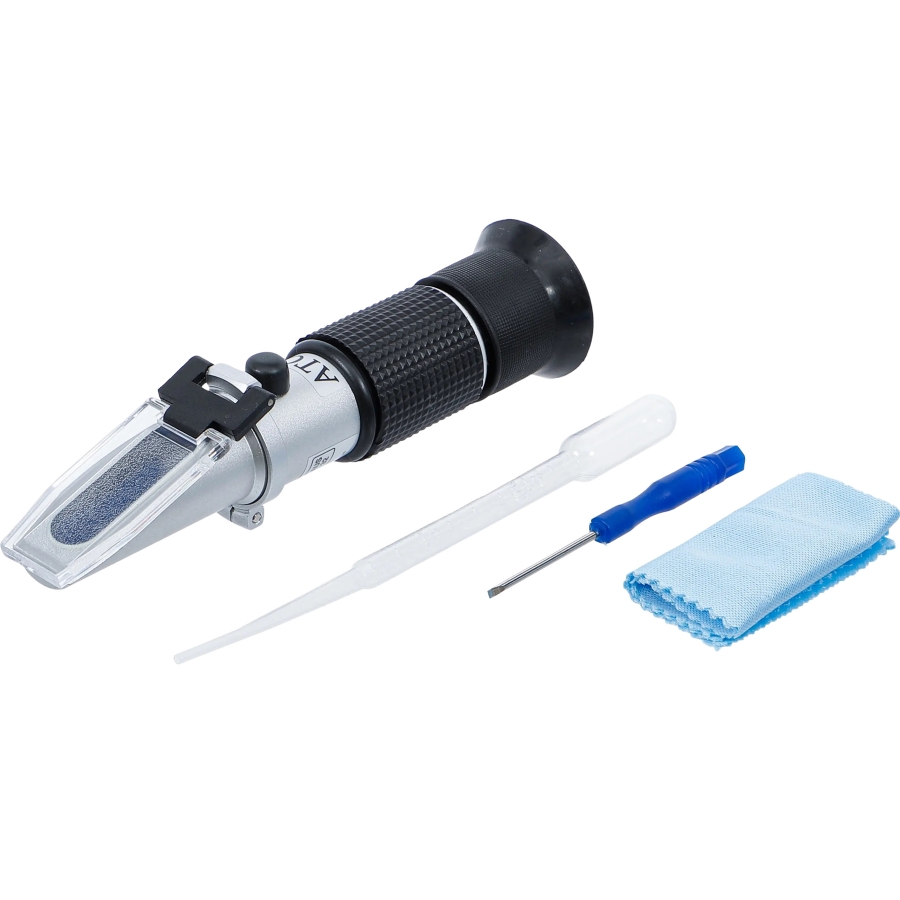
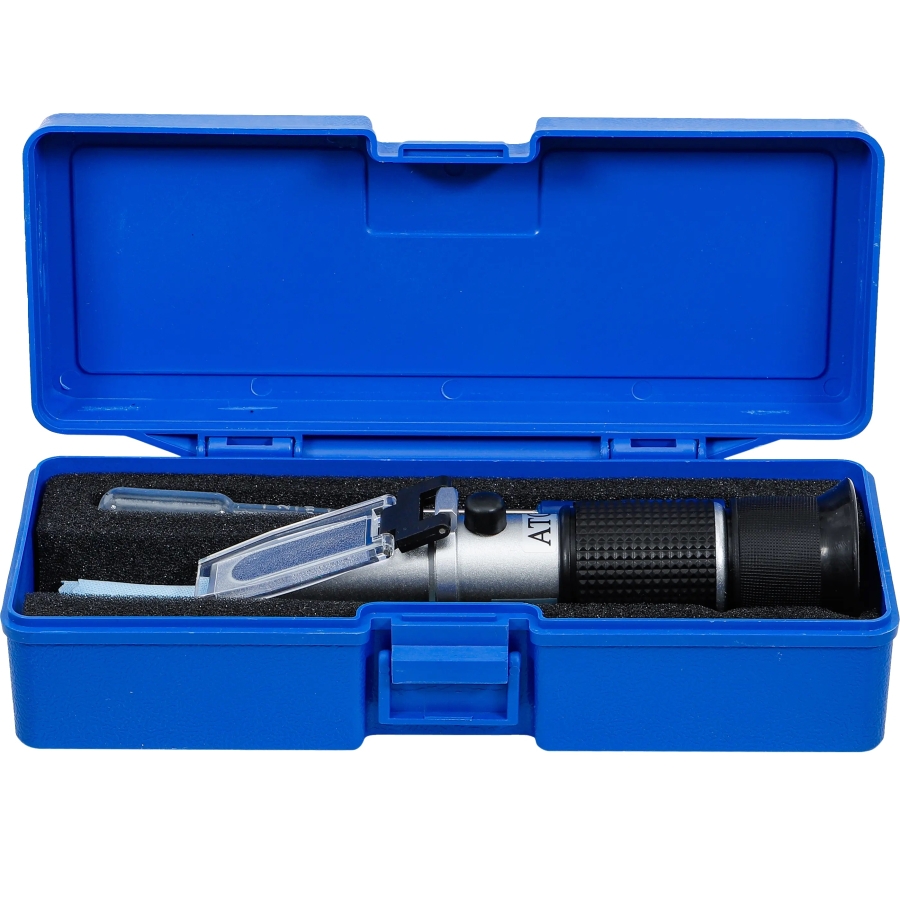
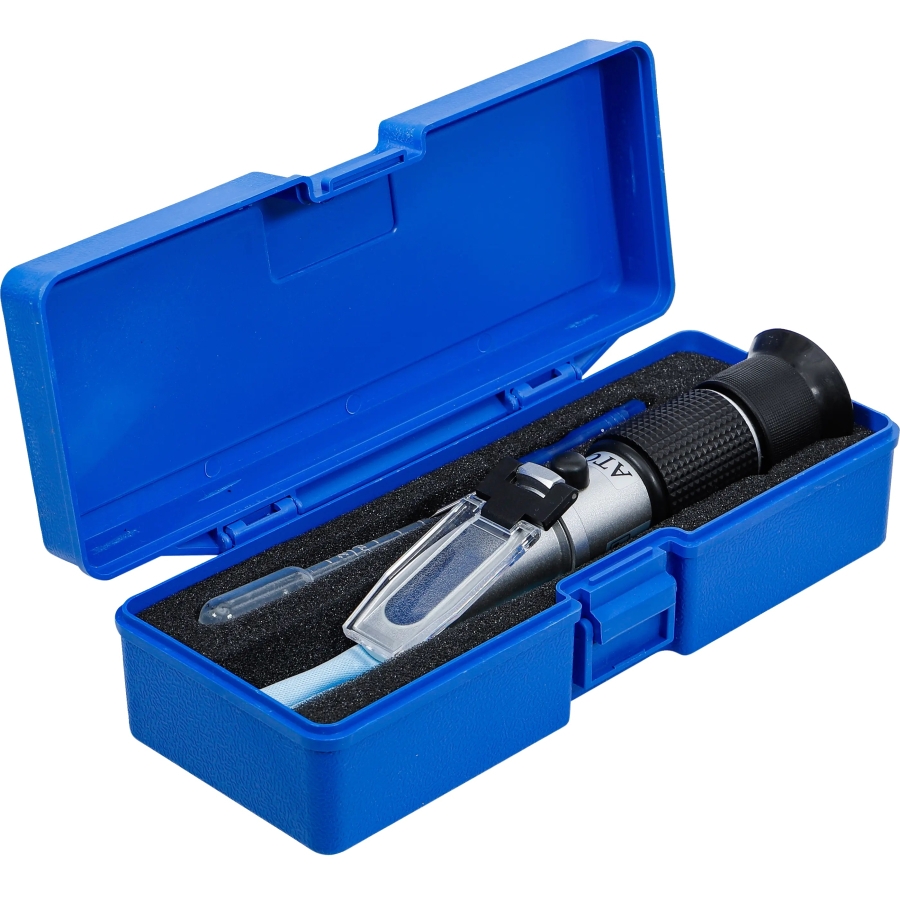
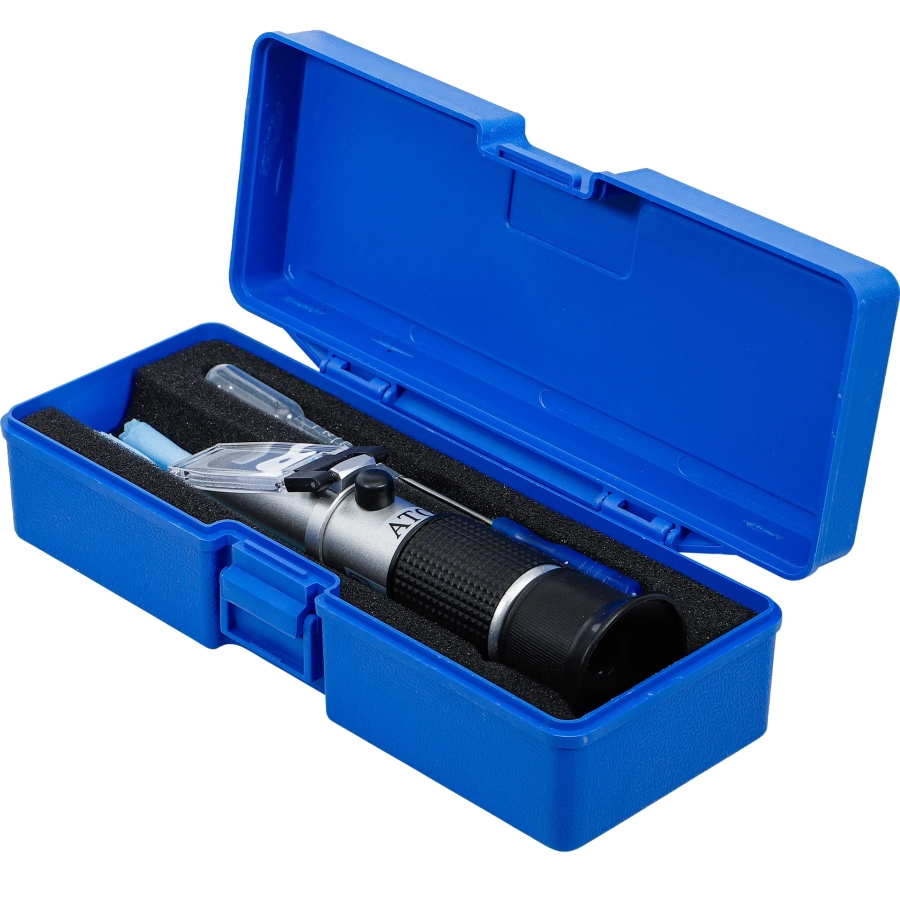
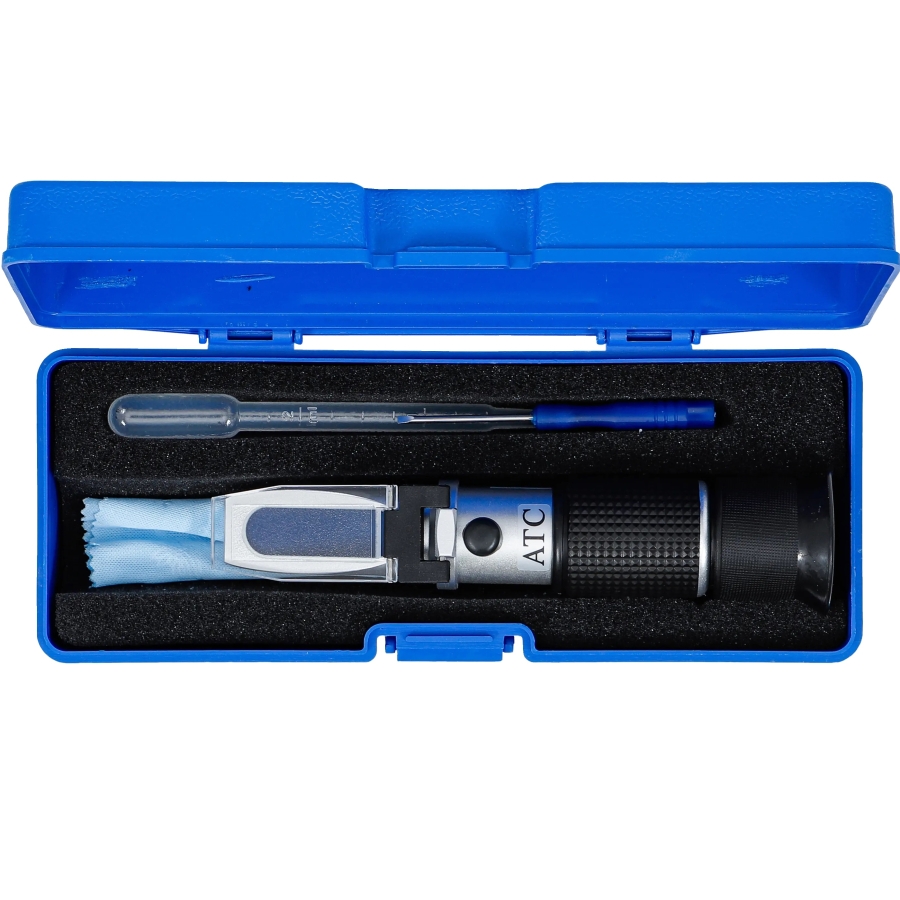
Automotive Refractometer for Battery Acid, Coolant, Windshield Washer Fluid & AdBlue®, as VAG T10007A
-
Code:1824
-
Weight:0.280 Kgs
Overview:
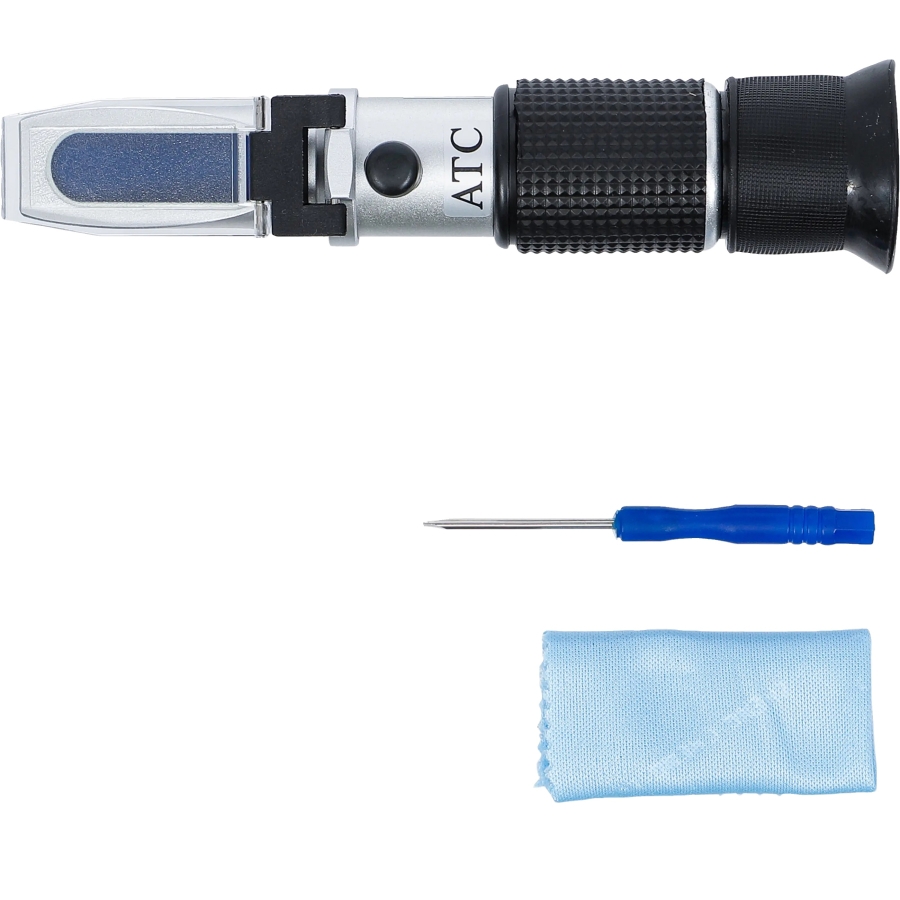
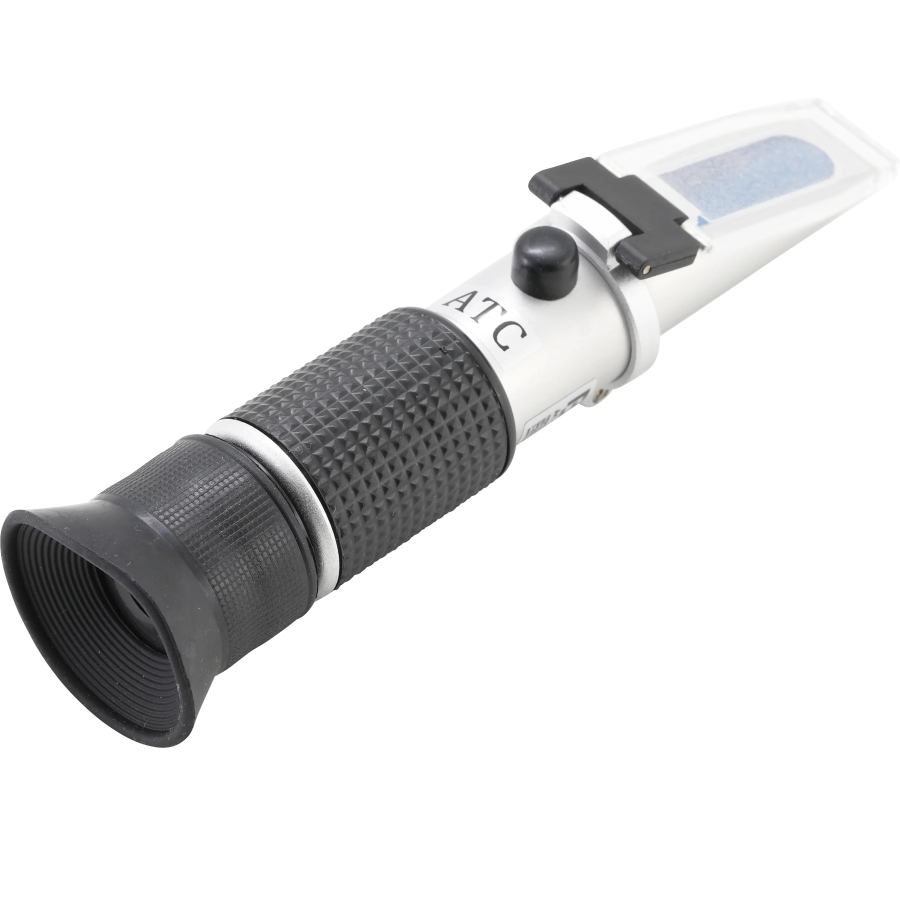
✔ Multifunction optical refractometer for automotive fluids
✔ Measures battery acid specific gravity from 1.10–1.40 kg/L
✔ Tests coolant antifreeze protection for ethylene and propylene glycol
✔ Measures windshield washer antifreeze protection (ethanol/alcohol based)
✔ Suitable for checking AdBlue® (AUS32) urea concentration
✔ Adjustable eyepiece for precise focusing
✔ Measurement accuracy of ±5%
✔ Supplied in a protective storage case with accessories

Step 1 – Calibrate the Refractometer
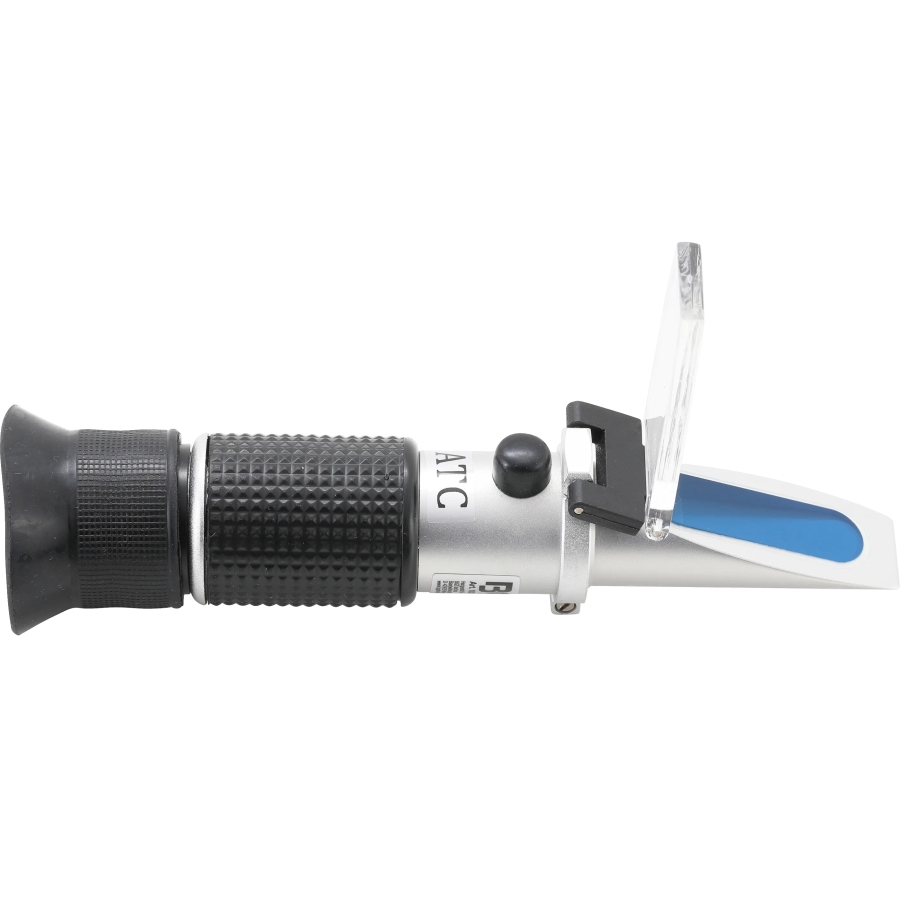
Open the daylight plate and place 2–3 drops of distilled water onto the main prism.
Close the daylight plate so the water spreads evenly across the prism surface without leaving any dry spots or air bubbles.
Allow approximately 30 seconds for the water to reach the ambient temperature before proceeding. During this time, the water will adjust to the temperature of the refractometer.
Step 2 – Prepare for Calibration
Hold the refractometer towards a bright light source and look through the eyepiece.
You will see a circular viewing field with graduated measurement scales. If necessary, adjust the eyepiece until the scale appears sharp and in focus.
The upper part of the field should appear blue, while the lower part should appear white.
Note: The illustrations shown in the original manual are for reference only. The actual scales supplied with your refractometer may differ depending on the model.
Step 3 – Adjust the Calibration
While looking through the eyepiece, use the calibration screw to adjust the boundary line between the blue (upper) and white (lower) areas until it aligns precisely with the 0 mark on the scale.
The refractometer is now calibrated.
For the most accurate results, calibration should be performed at an ambient temperature of 20°C (68°F).
If the ambient temperature (not the sample temperature) changes by more than 5°C, recalibration is recommended to maintain measurement accuracy.
For refractometers equipped with Automatic Temperature Compensation (ATC), calibration should always be performed at 20°C (68°F). Once calibrated, the ATC system automatically compensates for ambient temperatures between 10°C and 30°C, maintaining accurate measurements throughout this range.
Step 4 – Measure the Sample
Place a few drops of the test liquid onto the prism and close the daylight plate.
Look through the eyepiece and read the measurement where the boundary between the blue and white areas intersects the corresponding scale.
The scale indicates the concentration or freezing point of the tested fluid, depending on the selected measurement scale.
Example readings:
- Coolant freezing point: −32°C
- Battery acid specific gravity: 1.31
- AdBlue® (Urea): OK