Electric Soldering Gun 100 W
-
Code:9920
-
Weight:0.714 Kgs
Overview:
✔ 100 W electric soldering gun for soft soldering
✔ Suitable for soldering metals such as brass, copper and iron
✔ Integrated work light for improved visibility
✔ VDE plug and double-insulated construction
✔ Rated voltage: 220 V AC
✔ Net weight: 714 g

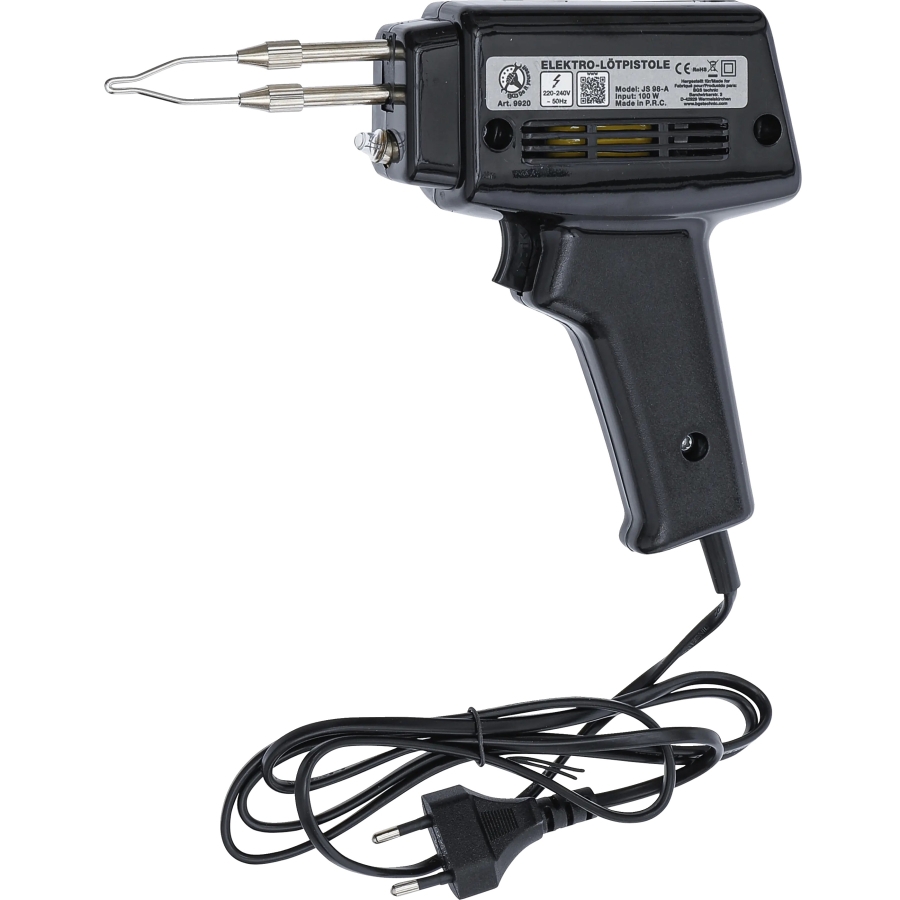
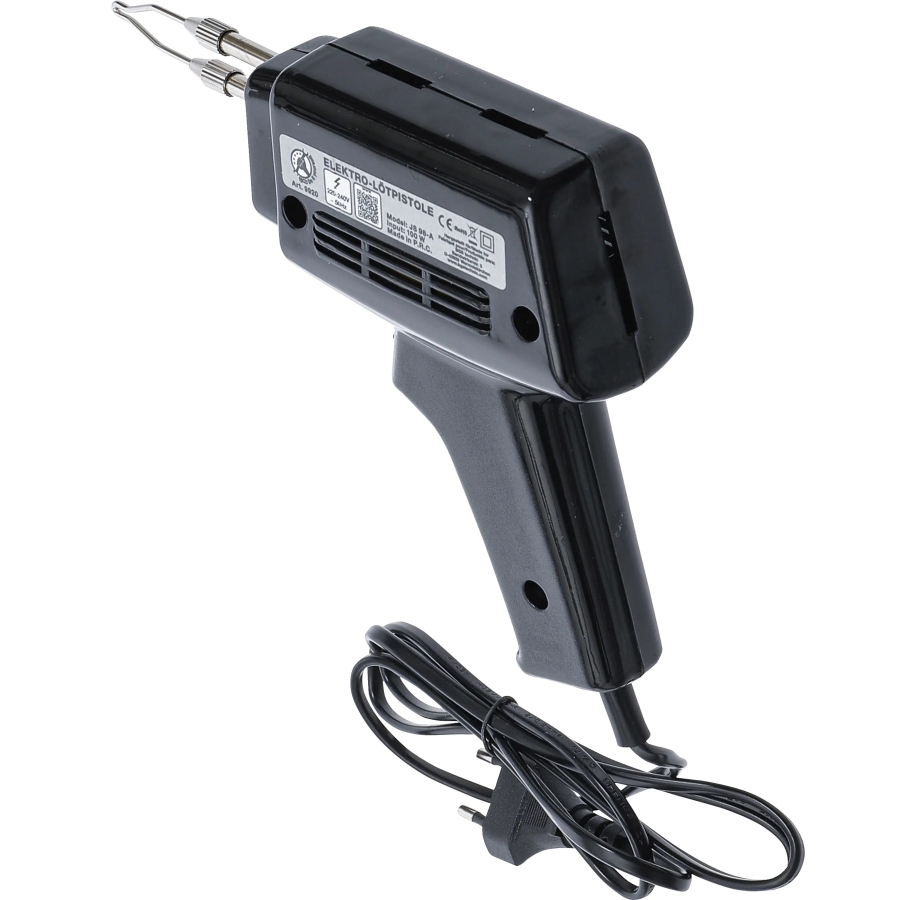
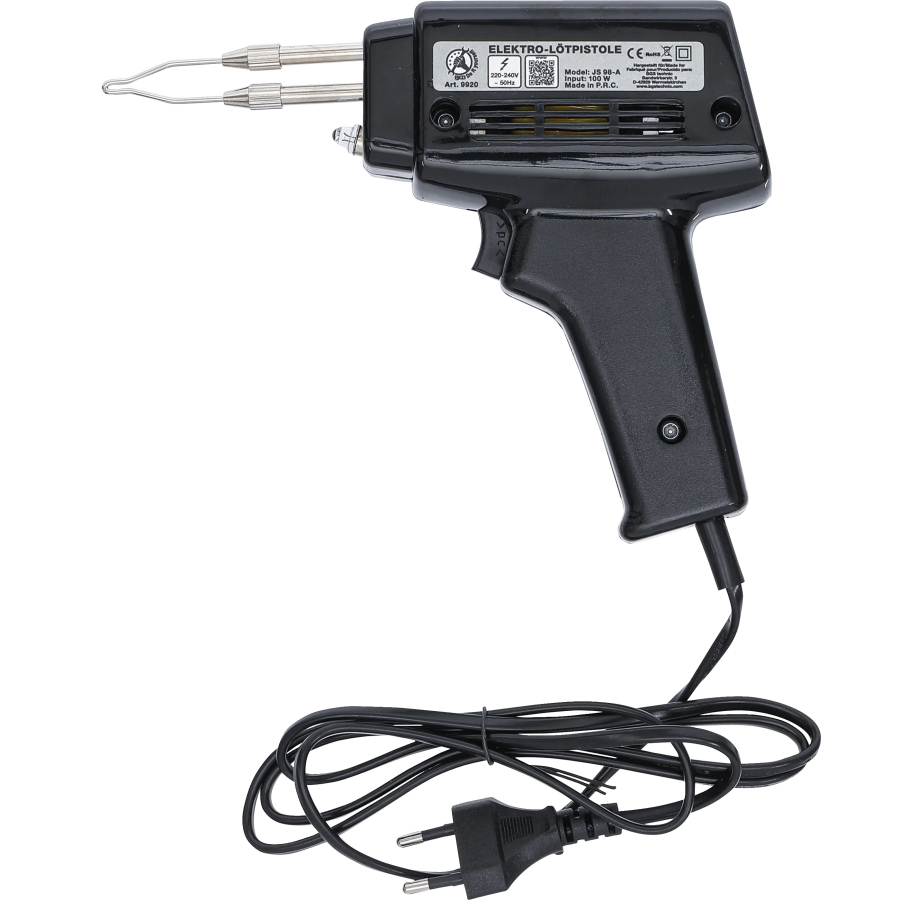
Soldering is a process used to join metallic materials with molten solder. Almost all metals and metal alloys can be soldered, particularly brass, copper and iron.
This 100 W electric soldering gun is designed for soft-soldering applications and features an integrated work light for better visibility of the soldering area.
Soft Soldering and Brazing
A distinction is made between brazing and soft soldering:
- Brazing: Performed at temperatures above 450 °C. Brazing alloys, silver solder and similar materials melt at temperatures that cannot be reached with this electric soldering gun.
- Soft soldering: Performed at temperatures below 400 °C. This soldering gun is intended exclusively for soft soldering.
Solder and Flux
Common soft solders for DIY and repair work are primarily manufactured in wire form.
There are two types of solder wire:
- Standard solder wire without a flux core
- Filled solder wire with an integrated flux core
Flux removes oxides from the surfaces being soldered and helps prevent further oxidation during the soldering process.
Soldering grease and soldering fluid should be carefully removed with a brush or cloth after soldering. Resin-based fluxes such as rosin normally do not require removal.
Common Soldering Materials
- Electronics solder: Melting point approximately 185 °C; low-temperature solder for electronic applications
- Radio solder: Melting point approximately 230 °C; suitable for model building and precision soldering
- General-purpose solder: Melting point approximately 255 °C; suitable for common soldering work
- Soft solder: For cold application to surfaces that will be soldered
- Tinning paste: Substitute for solder wire and flux
- Sal ammoniac block: For cleaning oxidation from soldering tips
- Soldering grease: Paste-type flux applied directly to the workpiece
- Soldering fluid: Liquid flux for hard-to-reach soldering points
Soldering Instructions
- Always clean the soldering point before beginning. Remove oil and dirt using a suitable solvent, such as thinner, or by washing the surface.
- Household cleaning products are unsuitable because they often contain silicone.
- Remove the oxide layer mechanically using abrasive cloth, a file or a scraper, or clean it chemically.
- Avoid aggressive acids such as hydrochloric, sulfuric or nitric acid. For conventional work, a 10% citric acid solution can be used warm or hot.
- Do not touch the cleaned soldering surfaces with your fingers.
- The soldering tip is made from copper and develops an oxide layer when heated. Remove this layer by gently rubbing the tip against a sal ammoniac block.
- Apply flux to the cleaned tip and lightly tin it with solder wire.
- The correct temperature has been reached when the solder flows across the tip as a thin film. If lumps form, the tip is not yet hot enough. If the solder forms beads, the tip is contaminated.
- After prolonged use, the soldering tip may develop corrosion caused by excessive or overly deep immersion in flux. Remove these damaged areas by lightly filing or sanding the tip.
Product Features
- Integrated work light
- VDE plug
- Double-insulated construction
Technical Data
- Power: 100 W
- Rated voltage: 220 V AC
- Net weight: 714 g