Transmission Pressure Tester Kit for Automatic Transmissions
-
Code:8028
-
Weight:2.464 Kgs
Overview:
✔ Professional pressure tester kit for automatic transmission diagnostics
✔ Enables fast diagnosis of transmission mechanical faults through oil pressure testing
✔ Long test hoses allow testing directly from the driver’s seat during operation
✔ Includes low and high-pressure gauges for transmission diagnostics
✔ Supplied with multiple adapters for various transmission systems
✔ Compatible with numerous VW, Audi, BMW, Mercedes-Benz, Ford, GM, Chrysler, Toyota, Volvo and ZF transmissions
✔ Suitable for workshop diagnostics and transmission service work

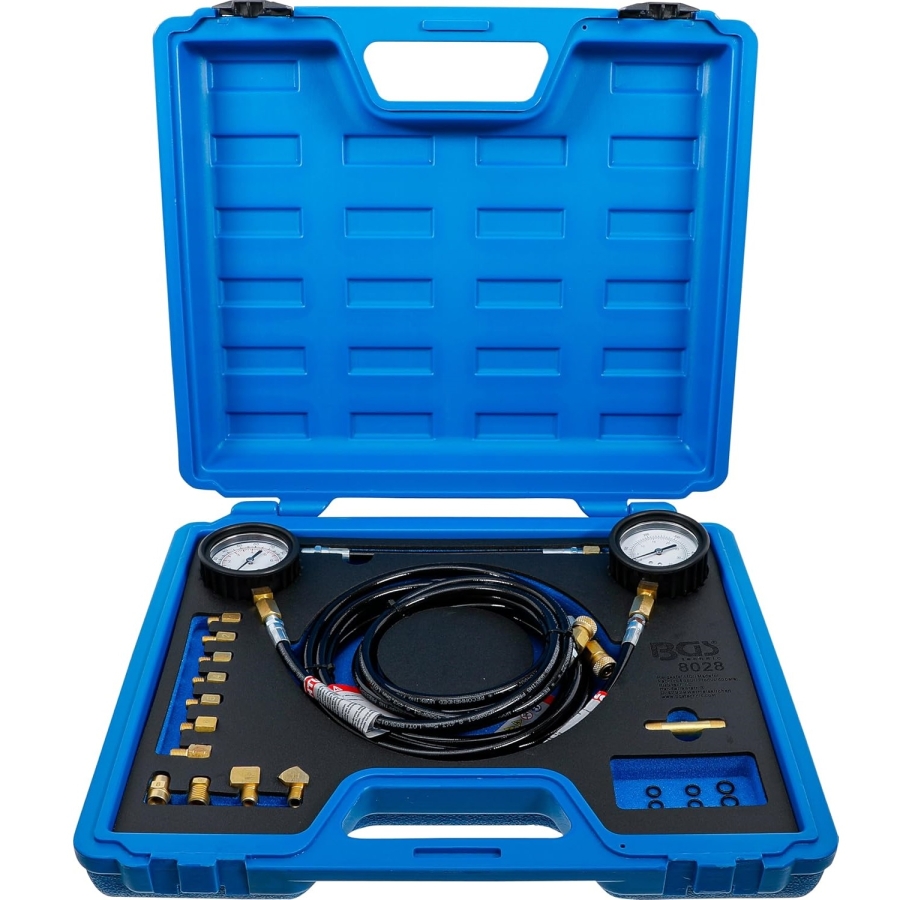
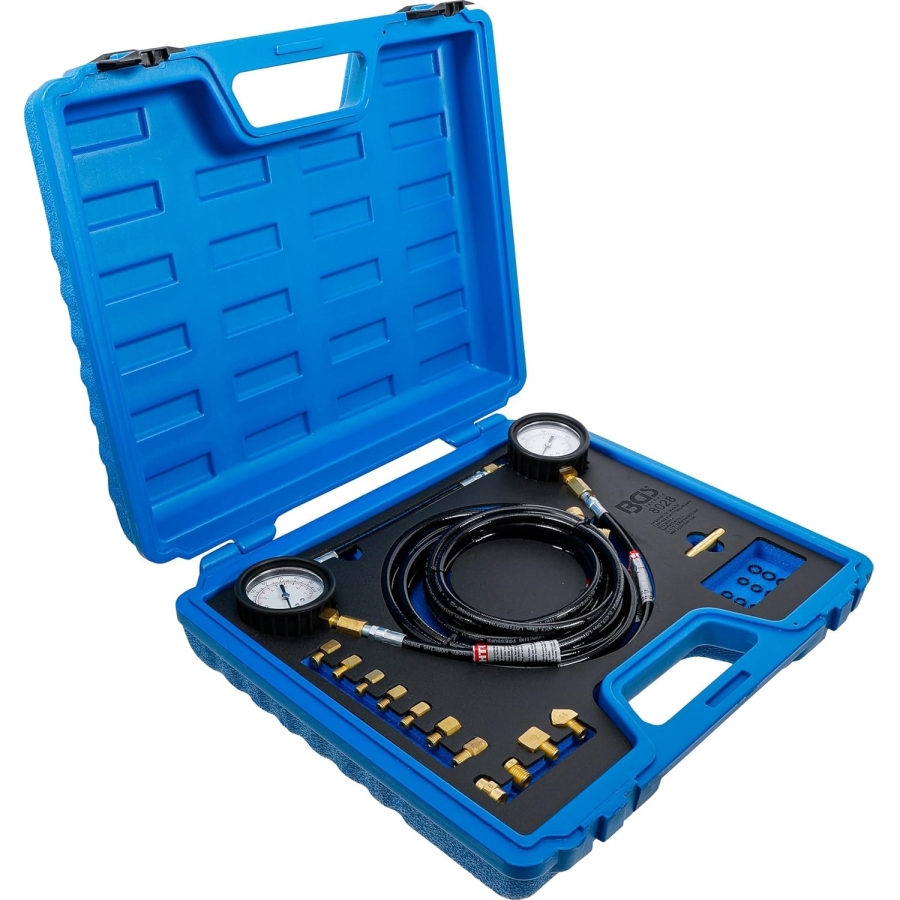
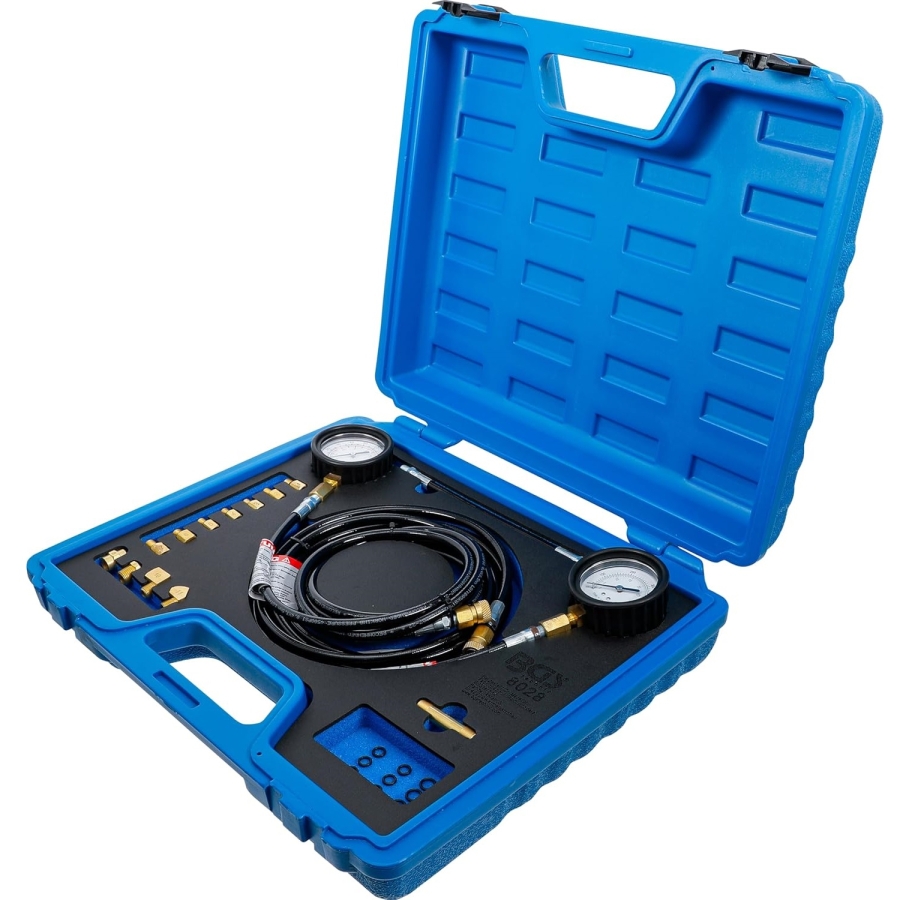
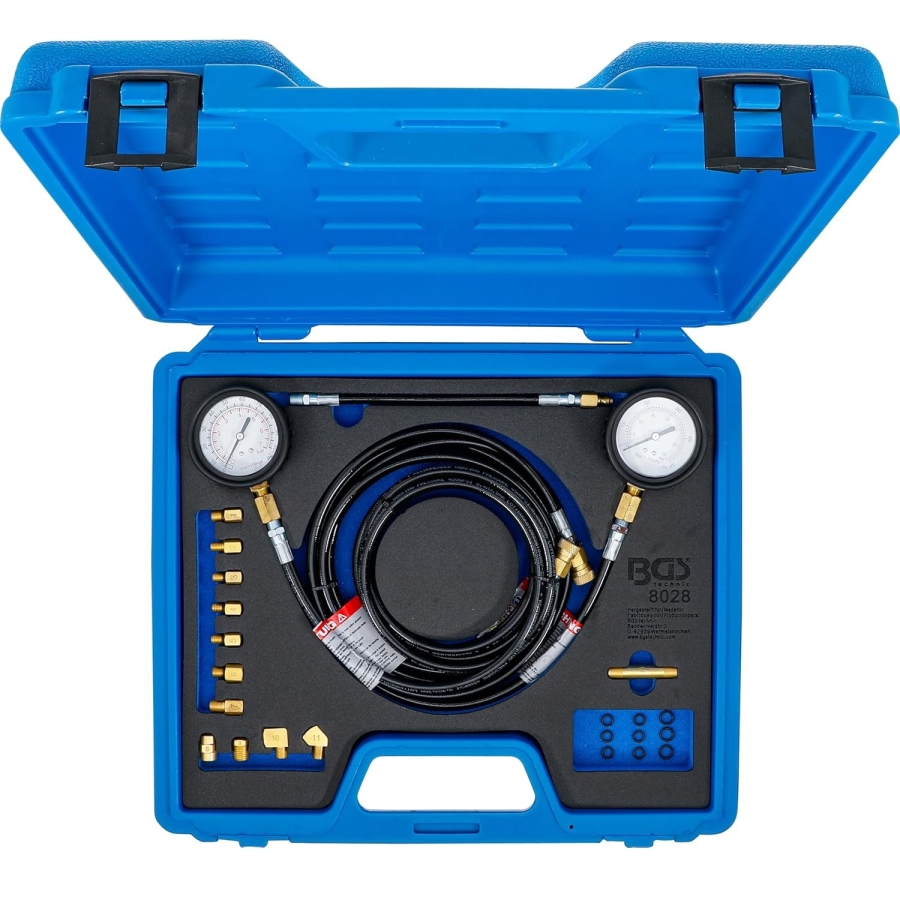
This transmission pressure tester kit is designed for fast and accurate diagnosis of automatic transmission mechanical systems through transmission oil pressure testing.
By monitoring transmission oil pressure, faults within the transmission system can be identified quickly and efficiently, making the kit suitable for professional workshop diagnostics and servicing.
The long diagnostic hoses allow pressure testing directly from the driver’s seat during operation and road testing.
Wide Transmission Compatibility
The tester kit is compatible with numerous automatic transmission systems from various manufacturers including:
- VW, Audi, Mercedes-Benz, BMW, Honda, Hyundai
- Chrysler, Jeep, AMC/Eagle
- Ford, GM, Isuzu, Jaguar
- Mitsubishi, Peugeot, Porsche, Saab
- Toyota, Volvo
Compatible with many ZF, Borg-Warner, AISIN Warner, JATCO, Hydra-Matic and Torque Lite transmission systems.
Dual Pressure Gauge System
The kit includes low and high-pressure gauges for comprehensive transmission pressure diagnostics.
High-Pressure Gauge
- Pressure range: 0–500 PSI / 0–35 bar
- Gauge diameter: 60 mm
- Hose length: 350 cm
Low-Pressure Gauge
- Pressure range: 0–100 PSI / 0–7 bar
- Gauge diameter: 60 mm
- Hose length: 200 cm
Adapter and Connection Equipment
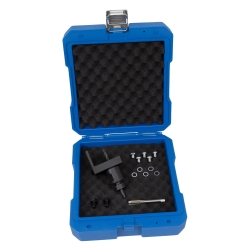
The kit includes multiple adapters and connection fittings for broad transmission compatibility.
Included Adapters
- 1/8-27 to M10x1.0
- 1/8-27 to 1/16-27 NPT
- 1/8-27 to 5/16-24 NF
- 1/8-27 to M8x1.25
- 1/8-27 to M8x1.0
- 1/8-27 VW/Audi adapter
- 1/8-27 to 1/8-28 BSPT
- 1/8-27 female to 1/4-18 NPT male adapter
- 90° angle adapter
- 45° angle adapter
- 50 mm adapter 1/8-27
Additional connection hose:
- 230 mm adapter hose
- 1/8-27 to 1/4" quick coupling
Compatible Transmission Examples
Compatible with transmission systems including:
- VW 003, VW 010, VW 097
- BMW Borg-Warner 65
- Chrysler 32 / 36 / 42 / 44 / 46 RH + RE
- Ford A4LD, AOD, AXOD, C3, C4, C5, C6
- GM 4L60E, 4L80E
- Toyota AISIN Warner A-20 + A-30
- Mercedes-Benz automatic transmissions
- Multiple ZF transmission systems
INSTRUCTIONS
Before Testing
- Identify the transmission to be tested and compare it with the applications listed in the table.
If this kit does not include a suitable adapter, the transmission pressure test kit must not be used. - Check the transmission fluid level and top up the transmission fluid if necessary.
Follow the instructions specified in the vehicle service manual. - The most accurate test results are obtained when the transmission fluid has reached operating temperature.
- Vehicle-specific service literature should be consulted for test data and procedures.
These contain important information such as:
- Purpose of the test
- Test procedure and testing sequence
- Adjustment specifications and settings
- Pressure specifications
- Pressure port / connection locations
Failure to verify these conditions correctly may result in inaccurate pressure readings.
GAUGES
Although the low-pressure gauge is designed for a range of 0–100 PSI and the high-pressure gauge is designed for a range of 0–500 PSI, please follow these recommendations:
- For pressure measurements between 60 and 100 PSI, the most accurate results are achieved using the high-pressure gauge.
A transmission malfunction may cause pressures higher than the specified values, which could exceed the maximum range of the low-pressure gauge. - If unusually high pressure readings are expected, always use the high-pressure gauge for the initial test.
If the pressure later drops to a lower range, the low-pressure gauge may then be used.
WARNING
When performing tests in an enclosed area, ensure adequate ventilation at all times.
Carbon monoxide is a colorless and odorless deadly gas.
Carbon monoxide poisoning may result in serious injury or death.
TEST PROCEDURE
Select the appropriate adapter and install it into the transmission housing.
The selected adapter is connected to the adapter hose.
The opposite end of the adapter hose is then connected to either pressure gauge.
NOTE: Ensure that the adapters are fitted with sealing rings and that the seals are not brittle or damaged. Replace the sealing rings if necessary.
- Raise the vehicle slightly.
- Use the adapter chart to select the correct adapter.
- Connect the adapter hose to the adapter.
Connect the opposite end of the adapter hose to the appropriate pressure gauge. - Remove the cap from the transmission test port.
Carefully verify that the adapter thread matches the thread in the transmission housing exactly.
Install the adapter into the transmission test port. Tighten the adapter carefully, ensuring that the threads are not overtightened or damaged. - Keep the hose away from moving or hot vehicle components.
Route the hose so the pressure gauge can be read safely from the side of the vehicle. - Start the vehicle and allow it to reach operating temperature.
The engine should remain idling during the test.
If any leakage occurs, switch off the engine and repair the leak before continuing. - Shift through the gears while observing the pressure gauge.
Compare the measured pressure readings with the specifications provided in the service manual.
The pressure readings can help identify defective transmission components. - After completing the test, move the selector lever to PARK.
Switch off the engine and allow it to cool down.
Remove the pressure gauge equipment and reinstall the cap on the transmission test port. - Check the transmission fluid level and top up if necessary.
MAINTENANCE
Clean the pressure gauges and hoses using a soft cloth.
Do not use aggressive cleaning agents, acetone, thinners, brake cleaner, or similar chemicals for cleaning.
Keep all components of the test kit clean at all times.
Pay particular attention to preventing dirt, dust, or cloth fibers from entering the adapters, hoses, or gauges.
Even very small dust particles entering the transmission may cause severe transmission damage.