Common Rail High-Pressure Test Kit for Digital Tester, item no. 63410
-
Code:63412
-
Weight:4.654 Kgs
Overview:
✔ Expansion kit for the digital pressure and compression tester, item no. 63410
✔ Measures the actual fuel pressure directly in Common Rail systems
✔ Supports diagnosis of the high-pressure pump, pressure regulator and injectors
✔ High-pressure sensor with integrated safety valve
✔ Flexible high-pressure hoses for easy connection to the injection system
✔ Includes injector leak-test plugs and a pressure-regulator blanking plug
✔ Suitable for most Common Rail vehicles and daily workshop use

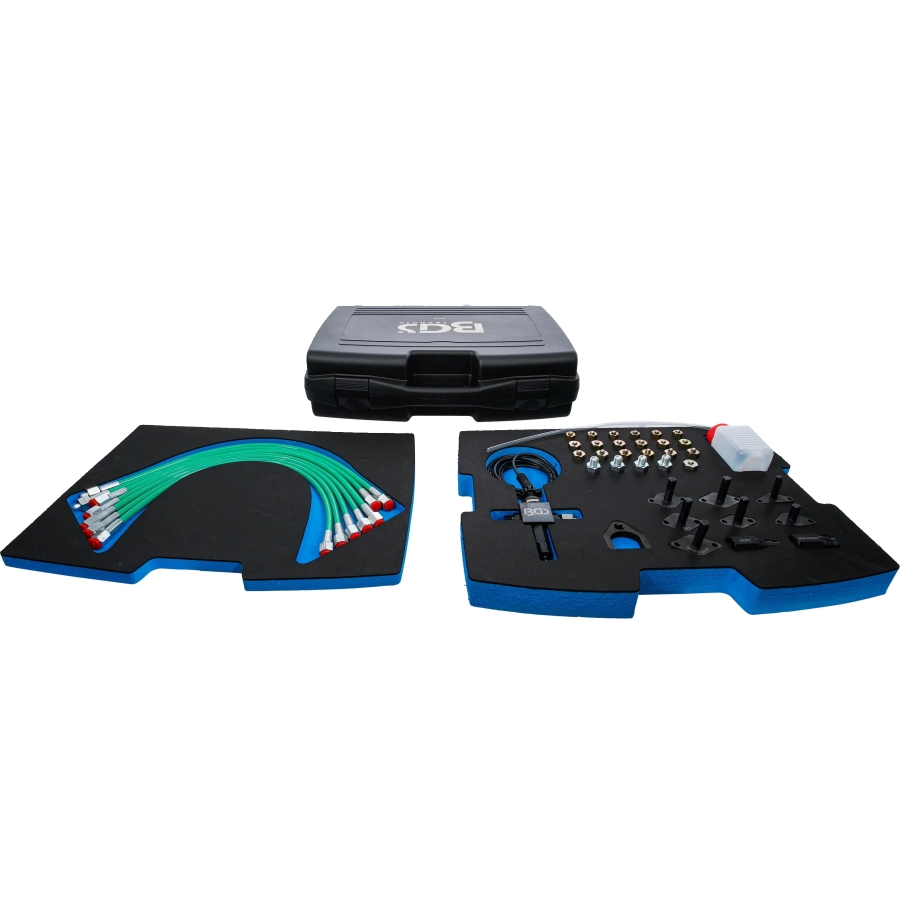
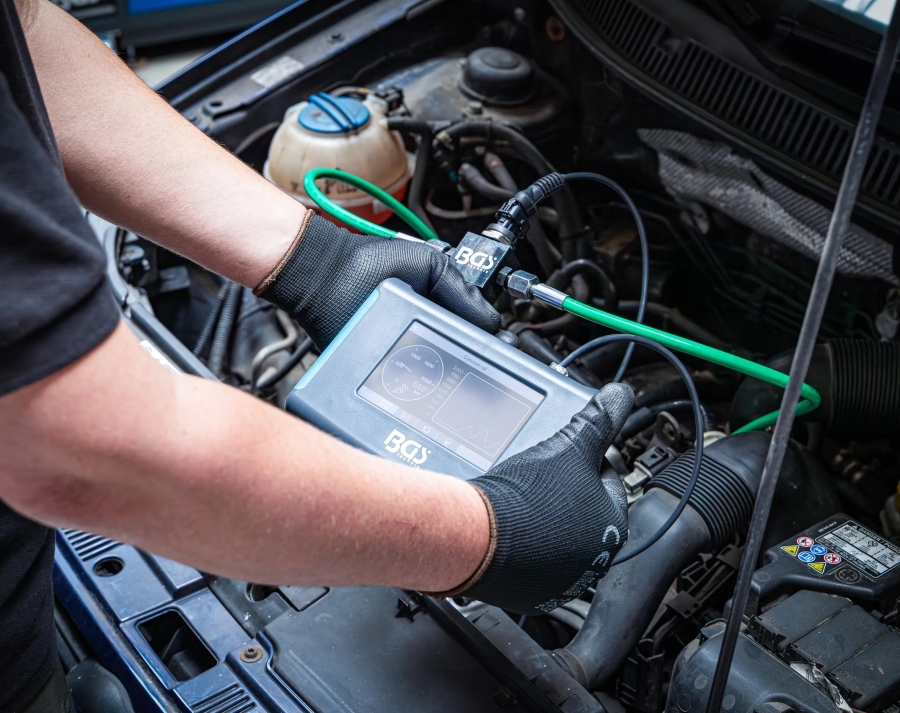
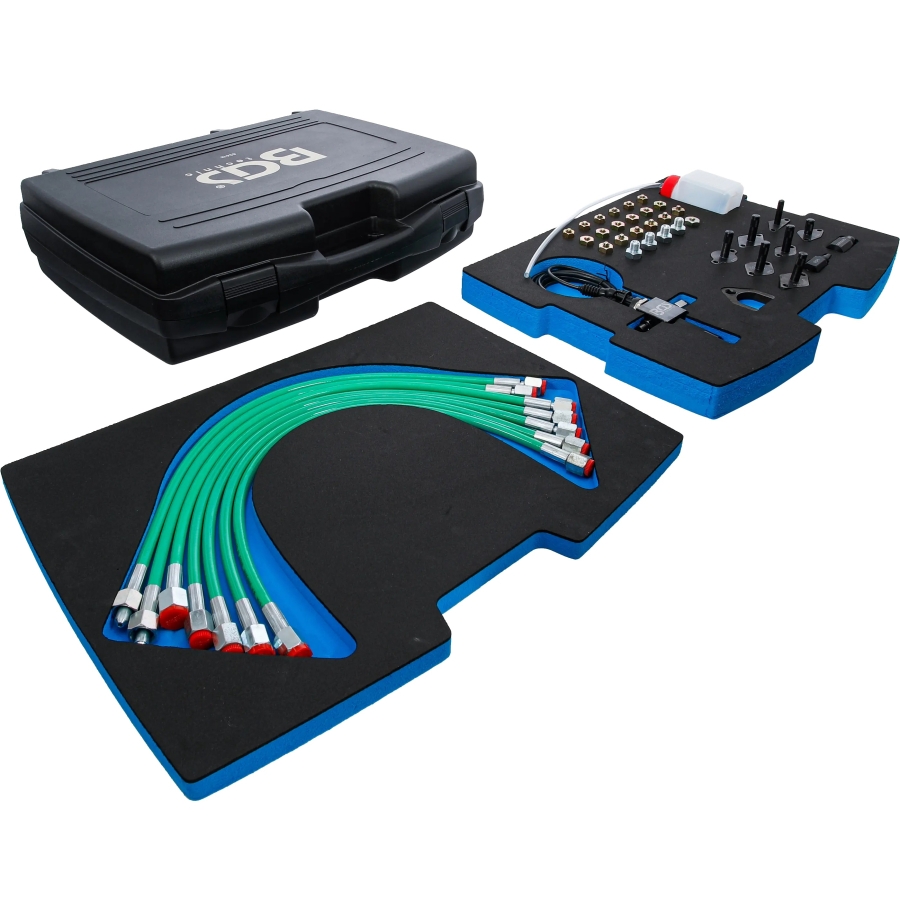
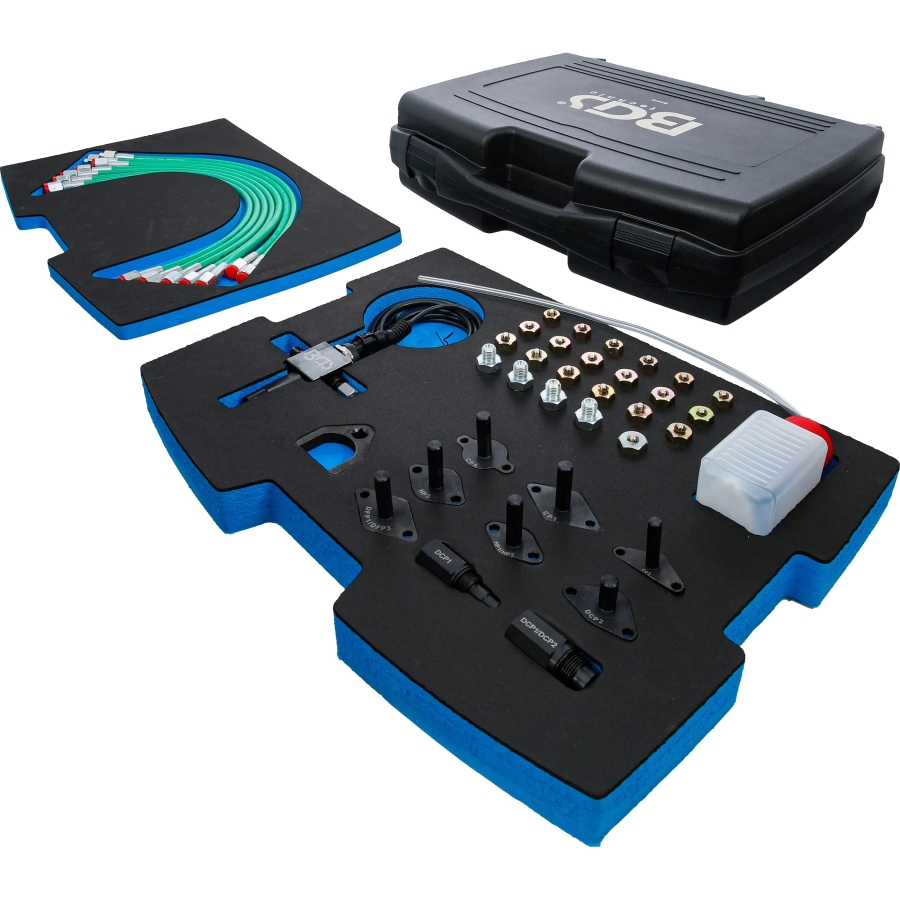
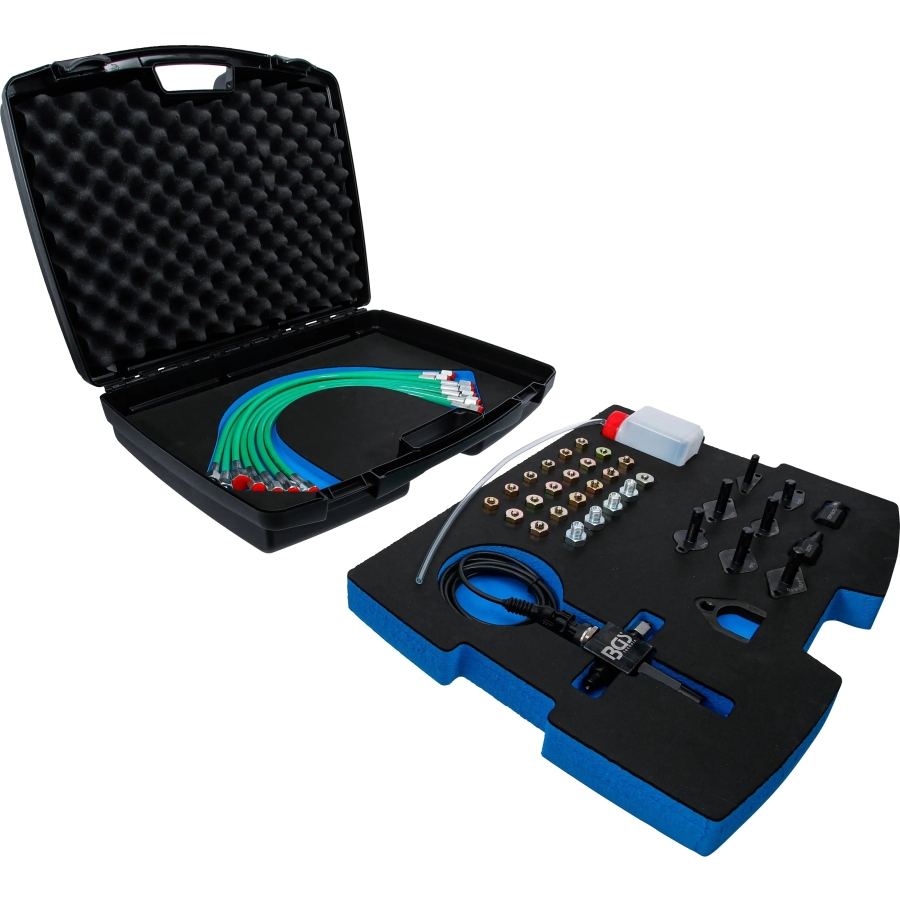
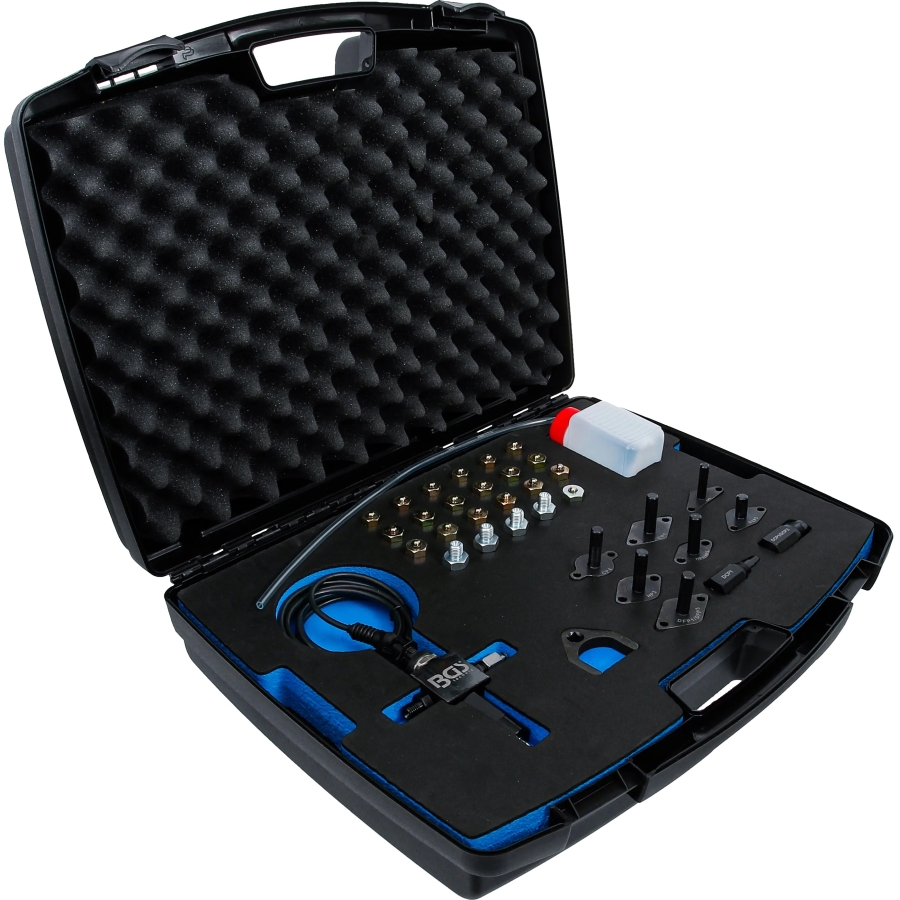
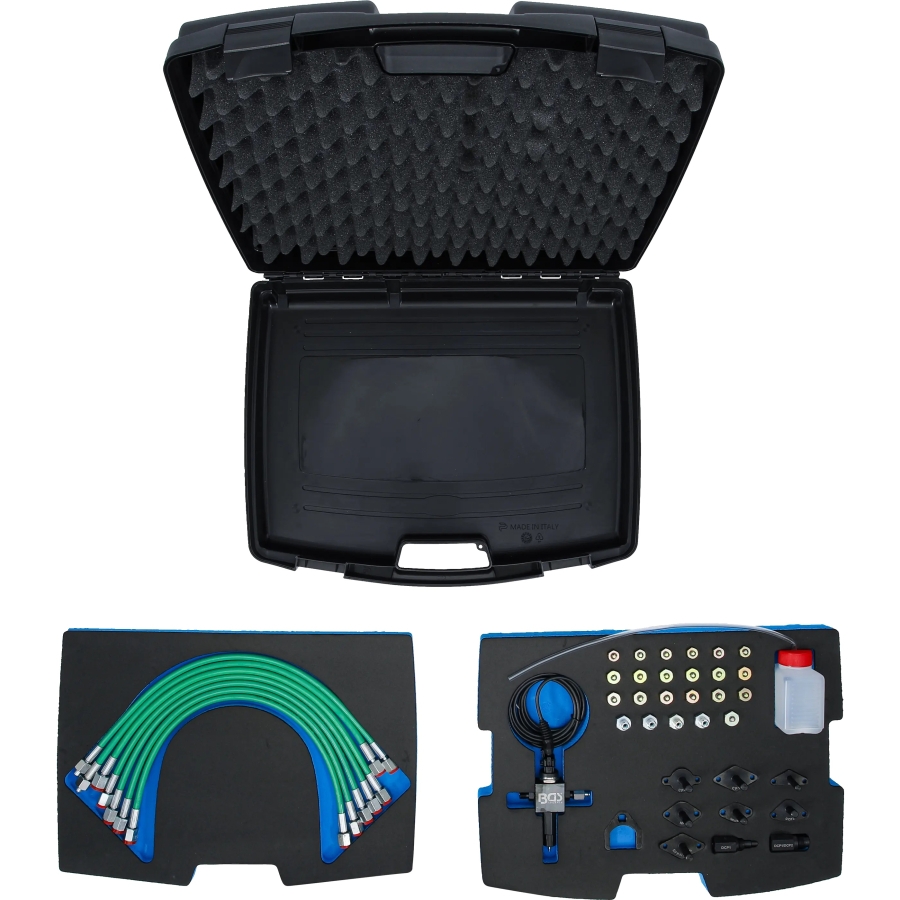
This test kit is designed for accurate diagnosis of Common Rail injection systems. When a Common Rail engine fails to start or runs incorrectly, the actual pressure generated in the high-pressure rail is one of the first parameters that should be checked.
Many diagnostic devices calculate the rail pressure using the signal from the vehicle’s existing pressure sensor. In combination with the BGS digital pressure and compression tester, item no. 63410, this kit measures the actual pressure directly in the Common Rail system.
Diagnostic Functions
The measured pressure values help assess the condition and operation of:
- The high-pressure fuel pump
- The pressure regulator
- The Common Rail system
- The fuel injectors
The high-pressure sensor is equipped with an integrated safety valve. It also allows the maximum pressure generated by the high-pressure pump to be checked.
The included pressure-regulator blanking plug helps determine whether insufficient pressure is caused by the high-pressure pump or the regulator. If both components operate correctly but the pressure remains too low, the injectors should be checked for leakage using the supplied test plugs.
Connection to the Injection System
The flexible high-pressure hoses simplify connection to different Common Rail systems. Multiple thread combinations and additional adapters provide broad compatibility with commonly used injection systems.
The electronic high-pressure sensor connects to the compatible digital tester, which displays and stores the measured pressure values.
Compatible Main Tester
For use with the BGS digital pressure and compression tester, item no. 63410.
The tester, its electronic display and its data-storage functions are not included in this expansion kit.
Scope of Delivery
- 1 × high-pressure sensor with safety valve
- 1 × flexible high-pressure hose, M12 × 1.50 / M12 × 1.50
- 2 × flexible high-pressure hoses, M12 × 1.50 / M14 × 1.50
- 2 × flexible high-pressure hoses, M12 × 1.50 / M14 × 1.00
- 2 × flexible high-pressure hoses, M12 × 1.50 / M16 × 1.00
- 2 × adapters, M12 × 1.25
- 2 × adapters, M14 × 1.25
- 6 × injector leak-test blanking plugs, M12 × 1.50
- 6 × injector leak-test blanking plugs, M14 × 1.50
- 6 × injector leak-test blanking plugs, M14 × 1.00
- 1 × pressure-regulator blanking plug
Connection & Rail Pressure Test
The Common Rail high-pressure tester is installed temporarily in place of an accessible high-pressure fuel line. Two suitable flexible hoses connect the tester to the injection system, allowing the actual rail pressure to be measured while cranking or with the engine running.
Choosing the Connection Point
The preferred connection point is normally the high-pressure line between the high-pressure pump and the fuel rail.
If access to the pump is restricted, the tester may instead be installed in place of an accessible high-pressure line between the rail and an injector. The pressure is the same throughout the connected high-pressure circuit.
Connecting the Tester
- Switch off the engine and depressurize the fuel system according to the vehicle manufacturer’s procedure.
- Locate an easily accessible high-pressure fuel line.
- Clean the surrounding area thoroughly before opening the system.
- Loosen the connections and remove the selected high-pressure line.
- Store the removed line in a clean, protected location. Contamination entering the injection system can cause serious damage.
- Select the appropriate flexible high-pressure hoses and adapters for the vehicle’s connection threads.
- Check that all hoses, adapters and connections are completely clean.
- Connect both flexible hoses to the high-pressure sensor assembly.
- Connect the two free hose ends to the corresponding connections on the injection system.
- Route the hoses without twisting, sharply bending, pinching or compressing them.
- Connect the electronic sensor to the digital pressure and compression tester, item no. 63410.
- Check every connection before cranking or starting the engine.
Follow the vehicle manufacturer’s requirements regarding tightening torque and the replacement of disconnected high-pressure fuel lines.
Testing During Cranking or with the Engine Running
- Switch on the digital tester and select the appropriate pressure-measurement function.
- Crank or start the engine while observing the displayed pressure.
- A slightly longer starting time after connecting the tester can be caused by air inside the test assembly.
- As a general reference, the rail pressure should reach approximately 300 bar during starting and at idle.
- Once the engine is running, increase the engine speed carefully and check that the pressure rises correctly.
Initial Result Analysis
Approximately 300 bar is reached:
The low-pressure fuel supply and the high-pressure pump are likely providing the minimum pressure required for starting. If the engine still does not start, investigate other possible causes such as an electrical fault, incorrect control signals or an injector problem.
The required starting pressure is not reached:
- Check the pressure at the inlet of the high-pressure pump using a suitable low-pressure tester.
- If the pump inlet pressure is correct, continue with the maximum pump-pressure test described in the second tab.
Handling and Cleanliness
- Never disconnect hoses or adapters while the system is pressurized.
- Keep every opened connection, hose and adapter completely clean.
- Do not use flexible hoses if they are kinked, crushed, cut or otherwise damaged.
- Do not route hoses where they can be trapped by moving or hot engine components.
- Protect the high-pressure sensor from impacts, drops and contamination.
Pump, Regulator & Injector Diagnosis
If the required rail pressure is not reached during cranking or normal operation, the system can be tested further to distinguish between a defective high-pressure pump, pressure regulator or leaking injector.
Maximum High-Pressure Pump Test
Some high-pressure pumps deactivate one pumping element when demand is low. Depending on the system, the additional pumping element may be activated at approximately 600–700 bar.
The maximum-pressure test determines whether the pump can generate the pressure required for correct operation.
- Switch off the engine and completely depressurize the fuel system.
- Connect one suitable high-pressure hose between the pump outlet and the tester.
- Close the tester outlet using the appropriate high-pressure blanking plug.
- Connect the discharge connection of the safety valve to a suitable approved container for collecting excess fuel.
- Check that all connections are clean, correctly tightened and safely positioned.
- Operate the starter motor only and monitor the pressure on the digital tester.
Reference result: pressure exceeds 1050 bar
The high-pressure pump can generate the required maximum pressure and is considered operational according to this test procedure.
Pressure does not reach 1050 bar
Continue with the pressure-regulator isolation test to determine whether the fault is in the pump or the regulator.
Pressure-Regulator Isolation Test
- Depressurize the system completely.
- Remove the pressure regulator from the high-pressure pump.
- Install the appropriate regulator blanking plug from the kit.
- Repeat the maximum pump-pressure test.
The pressure now exceeds 1050 bar:
The high-pressure pump is functioning correctly. The pressure regulator is the likely cause of the fault and should should be inspected or replaced according to the manufacturer’s instructions.
The pressure remains below the required value:
The fault is likely within the high-pressure pump. The pump should be removed and tested on a suitable test bench, repaired or replaced.
Injector Leakage Isolation Test
If the pump and regulator operate correctly but the required starting pressure is not reached when the complete injection system is connected, one or more injectors may have an internal leak.
- Connect the high-pressure tester between the injection pump and the fuel rail as described in the first tab.
- Depressurize the system and disconnect the high-pressure lines between the rail and the injectors.
-
Close the corresponding fuel-rail outlets using the supplied test plugs:
- M12 × 1.50
- M14 × 1.50
- M14 × 1.00
- The supplied plugs allow systems with up to six cylinders to be tested.
- Operate the starter motor for several seconds and monitor the rail pressure.
Injector Test Result Analysis
The measured pressure reaches approximately 250–400 bar:
The high-pressure pump and regulator are functioning correctly. If the pressure was too low before the injector outlets were closed, at least one injector is leaking.
Identifying the leaking injector:
- Depressurize the system after every measurement.
- Reconnect the injectors individually, one at a time.
- Repeat the pressure test after connecting each injector.
- Compare the measured values to identify the injector that causes the pressure to drop.
After completing the diagnosis, restore the fuel system according to the vehicle manufacturer’s procedure. Observe all specified tightening torques and replacement requirements for opened high-pressure lines and sealing components.
-
Digital Pressure and Compression Diagnostic Tester with Wi-Fi Updates
Price: €995.00Available • 5–10 Days Delivery