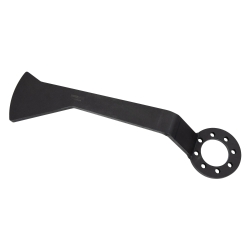
Lambda Sensor Tester & Simulator
-
Code:9454
-
Weight:0.442 Kgs
Advanced lambda sensor tester and simulator for 1–4 wire heated and unheated sensors. Tests and simulates zirconia and titania sensors with LED signal display and automatic cable identification – ideal for professional ECU diagnostics.

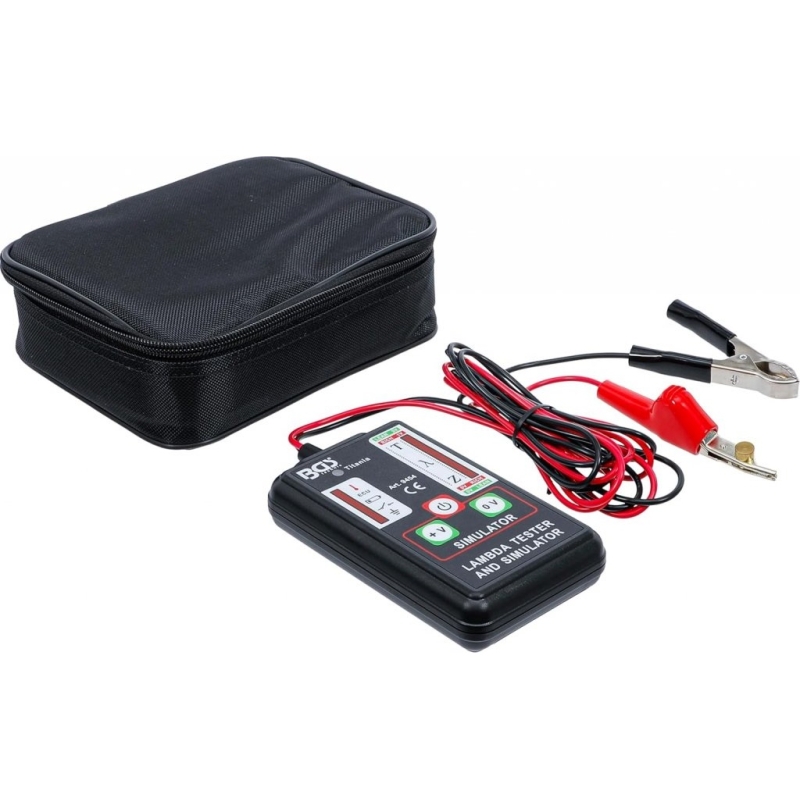
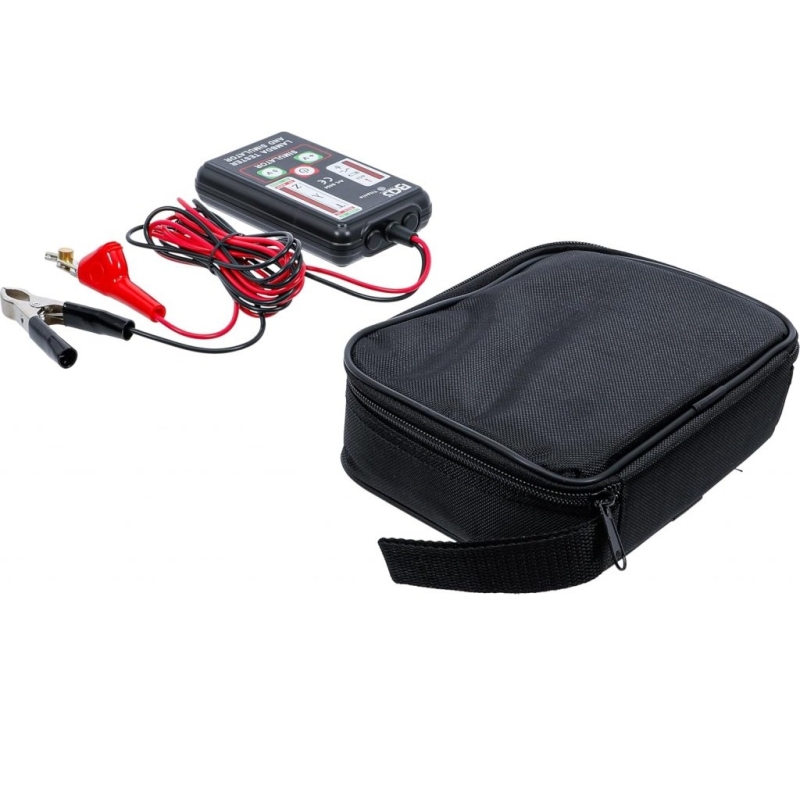
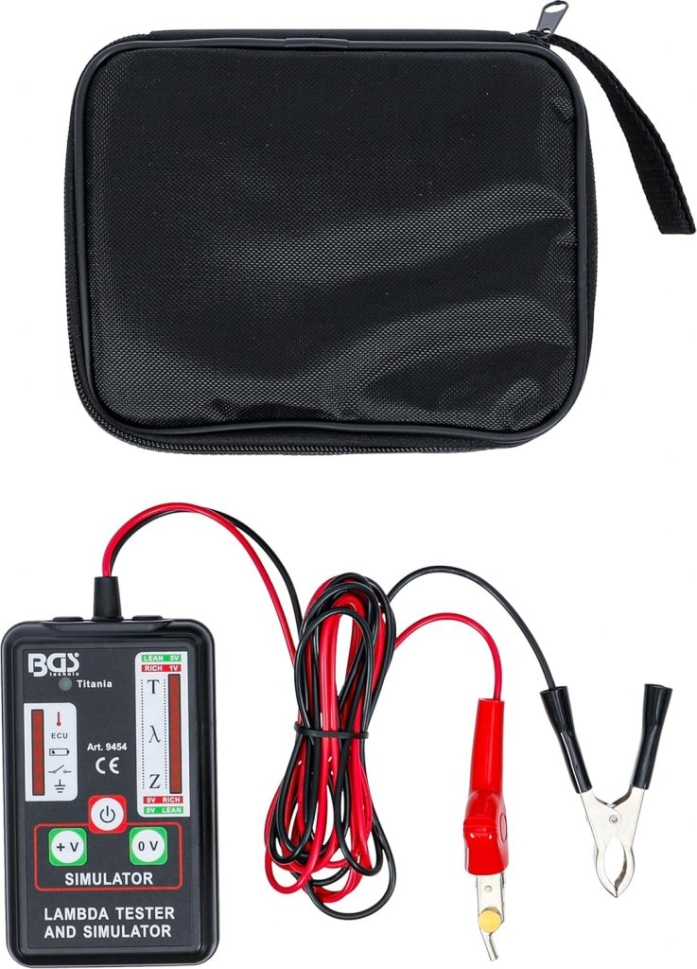
This professional lambda sensor tester and simulator provides complete diagnostic capabilities for modern engines. It supports 1–4 wire heated and unheated sensors, including both zirconium (ZrO₂) and titanium dioxide (TiO₂) types. The LED display shows real-time sensor signal status and mixture simulation (rich or lean), enabling accurate ECU response verification.
Automatic cable recognition detects heater lines, ground, signal, and supply voltage, reducing errors and saving time. The robust ABS housing with sealed buttons ensures durability in harsh workshop environments. Low battery warning guarantees reliable operation.
Advantages:
-
Supports 1–4 wire heated and unheated lambda sensors
-
Compatible with zirconia and titania sensors
-
LED display clearly shows signal status and mixture mode
-
Simulates rich and lean mixtures for ECU testing
-
Automatic detection of wiring, ground, heater, and supply voltage
-
Durable ABS housing with sealed buttons
-
Low battery indicator for safe operation
How to Use:
-
Connect tester to lambda sensor wires according to color code.
-
Power on the device and select sensor type (Zirconia or Titania).
-
Use “0 V” and “+ V” buttons to simulate lean or rich mixture.
-
Observe LED display to verify ECU response.
-
For titania sensors, hold “On/Off” with “+ V” at startup to switch modes.
Technical Specifications:
-
Compatibility: Zirconia and titania lambda sensors
-
Wires: 1–4 (heated & unheated)
-
Power source: 9V battery (6F22, included)
-
Operating temp.: -10°C to +50°C
-
Storage temp.: -20°C to +60°C
-
Humidity: <75% operating / <85% storage
-
Dimensions: 147 × 81 × 29 mm
-
Weight: approx. 250 g (incl. battery)
-
Material: Impact-resistant ABS plastic
Why Choose This Tester:
Unlike simpler testers, this model allows both testing and simulation of lambda sensors, providing active control of ECU response. Automatic cable detection minimizes errors and saves time, making it a professional tool for workshops and automotive technicians specializing in exhaust and engine diagnostics.
Titanium Dioxide Lambda Sensor Mode Selection
To select the test mode for titanium dioxide (Titania) lambda sensors, press the On/Off button while holding down the +V button.
The Titania LED will light up. Release the buttons.
Tip: If the Titania LED is on, the tester is in titanium dioxide sensor mode. If the Zirconia LED lights, the tester is in zirconium sensor mode and the Titania LED turns off.
Connections and Buttons
-
Black: Ground clamp
-
Red: Wire piercing clamp
-
On/Off: Power the tester on or off
-
+V: Simulate rich/fat mixture (see below)
-
0V: Simulate lean mixture (see below)
Button Functions:
-
On/Off: Turn the tester on/off.
-
0V: For zirconia sensors, simulates a lean mixture; for titania sensors, simulates a rich mixture.
-
+V: For zirconia sensors, simulates a rich mixture; for titania sensors, simulates a lean mixture.
Important Note: Engine must be at normal operating temperature and idling at 1500–2000 RPM for testing. The tester features a wire piercing clamp for safe sensor cable connection without damage.
Testing Procedure
-
Turn on the tester and select the desired sensor mode.
-
Connect the black ground clip to a conductive engine component or the negative battery terminal.
-
Connect the red piercing clamp to the lambda sensor wire.
-
The tester supports sensors with 1–4 wires.
-
For sensors with multiple wires, the indicator panel shows which wire is connected.
-
First LED: Sensor heater voltage
-
Second LED: 5V ECU supply (if present, titania sensors)
-
-
Open-circuit LED lights if no connection is detected or contact is poor.
LED Behavior and Interpretation
-
When properly connected to the signal wire, LEDs on the display turn off, and the LED bar in the Lambda window activates.
-
Continuous alternating LED flashes between LEAN and RICH indicate a properly working sensor.
-
If the pattern is abnormal, the ECU or sensor may be faulty. Use the tester simulation feature to send LEAN or RICH signals and observe engine response.
-
Engine speed drop and exhaust response can help confirm sensor functionality.
Note: Simulated signals may trigger ECU error codes in some vehicles; read and clear codes with an OBD reader if necessary.
| File | Info |
|---|---|
 Instruction Manual BGS9454
|
[, 0 B] |