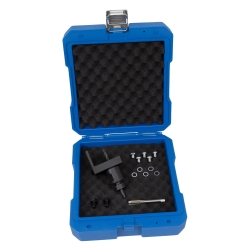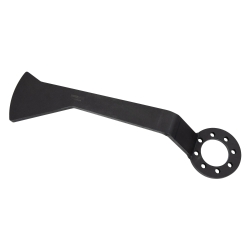
Diagnostic Set for Turbocharger, Crankcase Ventilation & Particulate Filter with Manometers and Hose Balance
-
Code:123493-1
-
Weight:1.740 Kgs
Overview:
✔ Professional diagnostic set for turbocharger, particulate filter and crankcase system diagnostics
✔ Suitable for testing pressure, vacuum and exhaust-related systems
✔ Enables diagnosis while stationary or during road testing
✔ Includes hose balance system and diagnostic hose set with analog pressure gauges
✔ Universal configuration for various vehicle applications
✔ Analog measurements provide real operating values for comparison with scan tool data
✔ Printed diagnostic instructions directly on coated aluminum plate
✔ Helps prevent unnecessary replacement of components through improved diagnosis

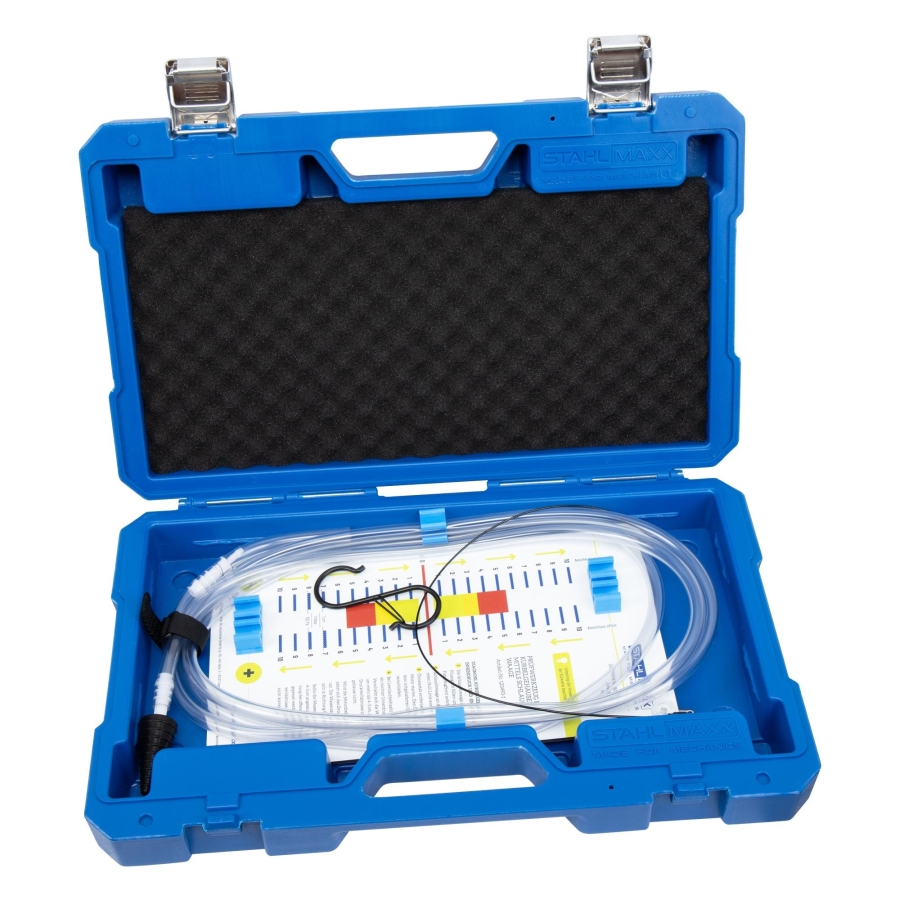
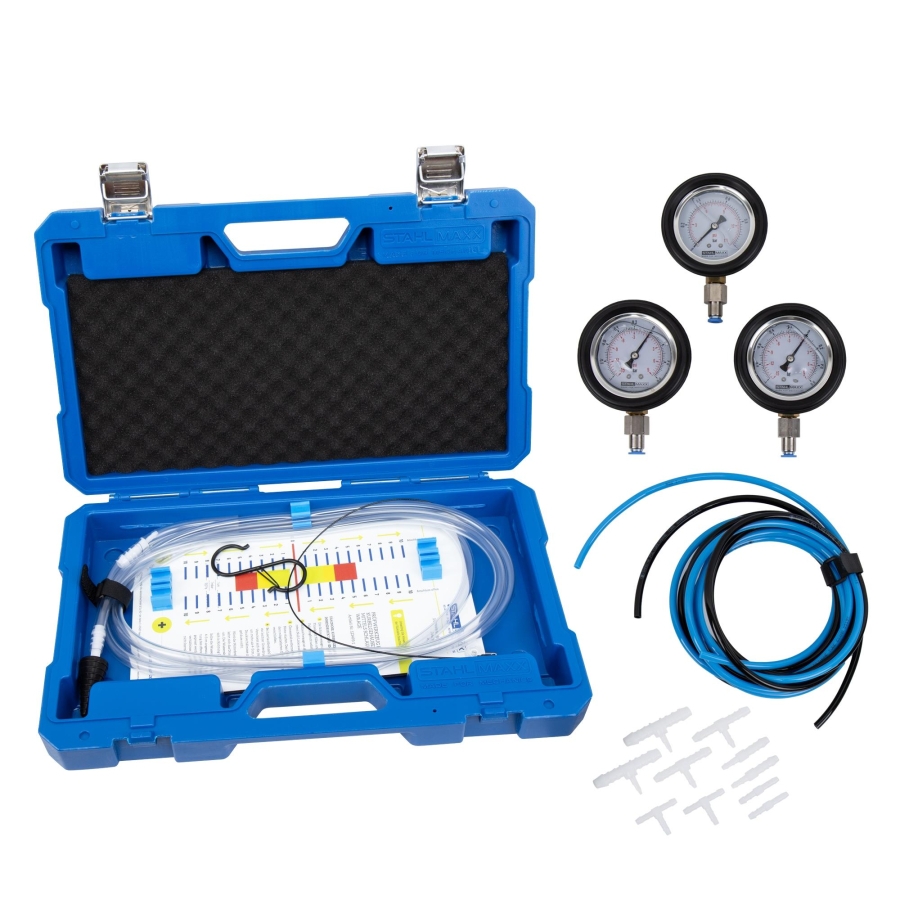
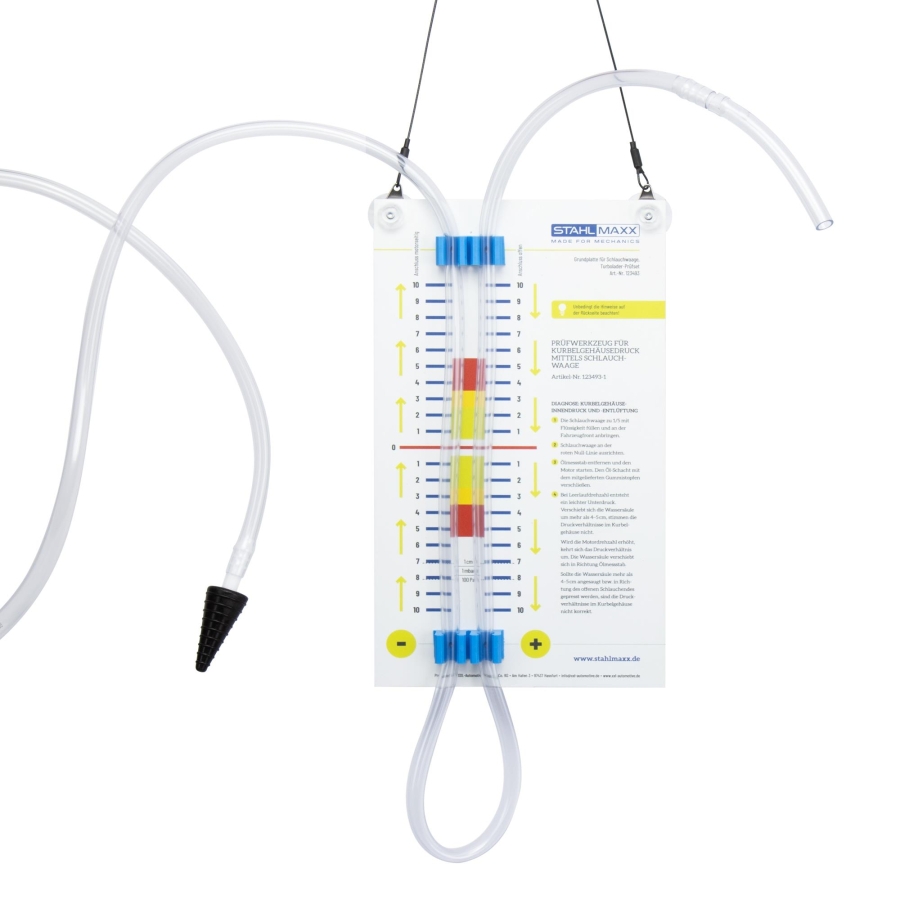
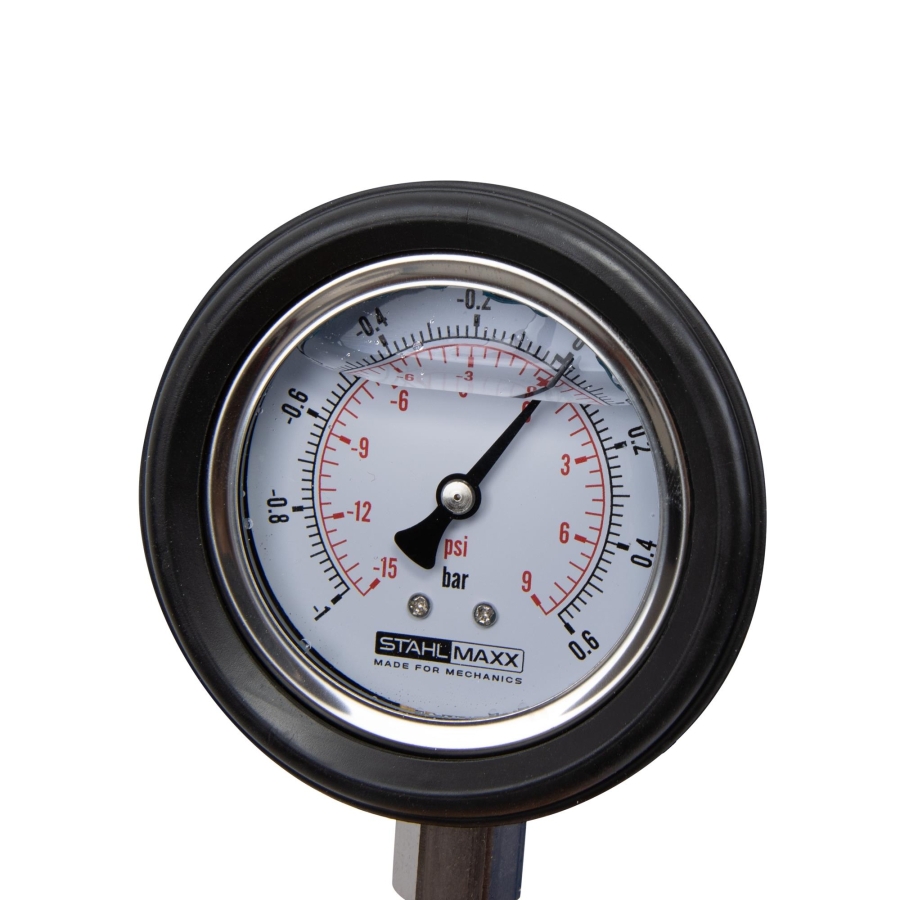
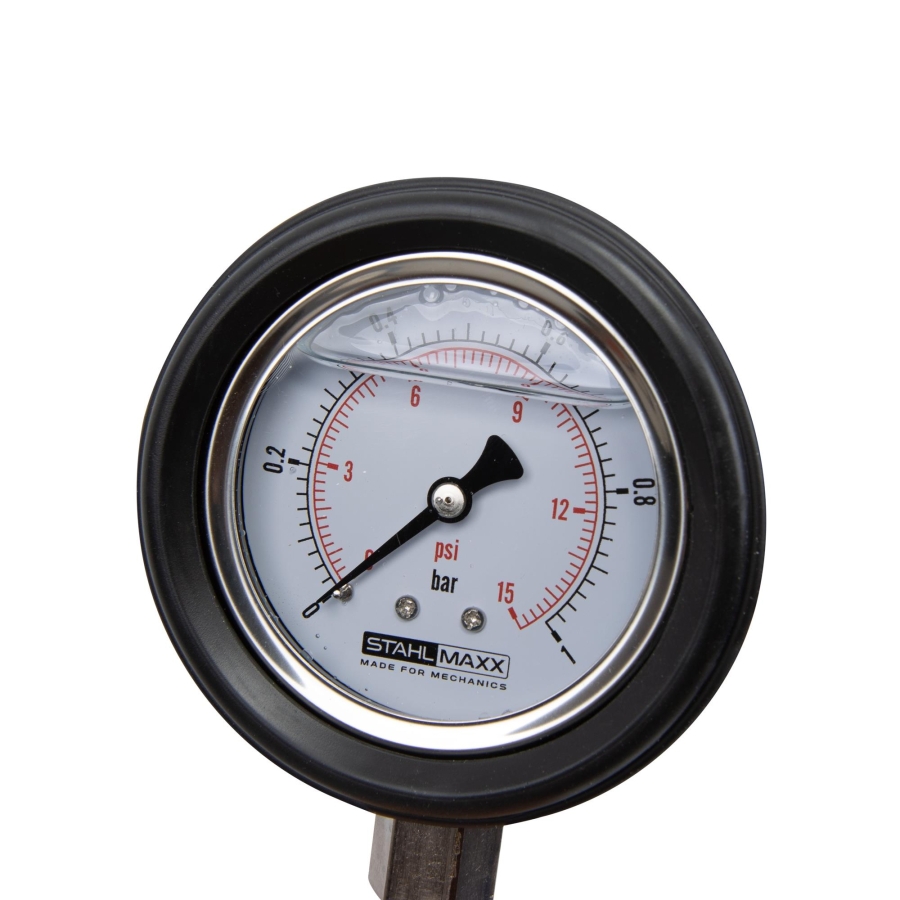
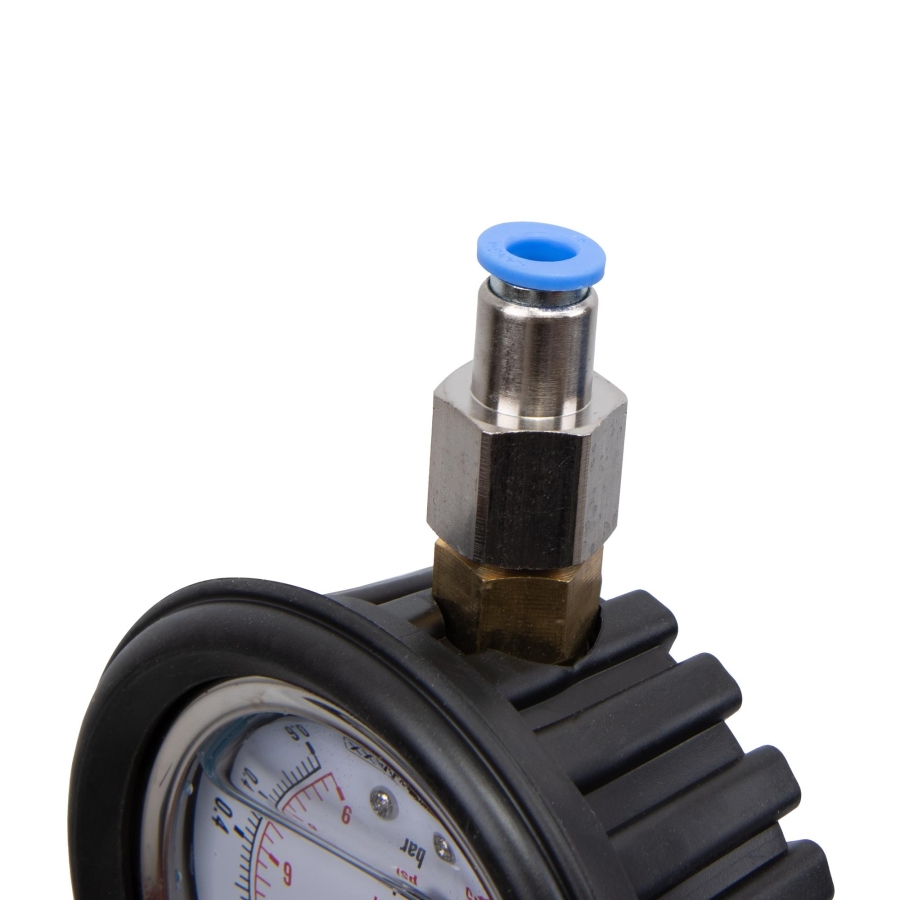
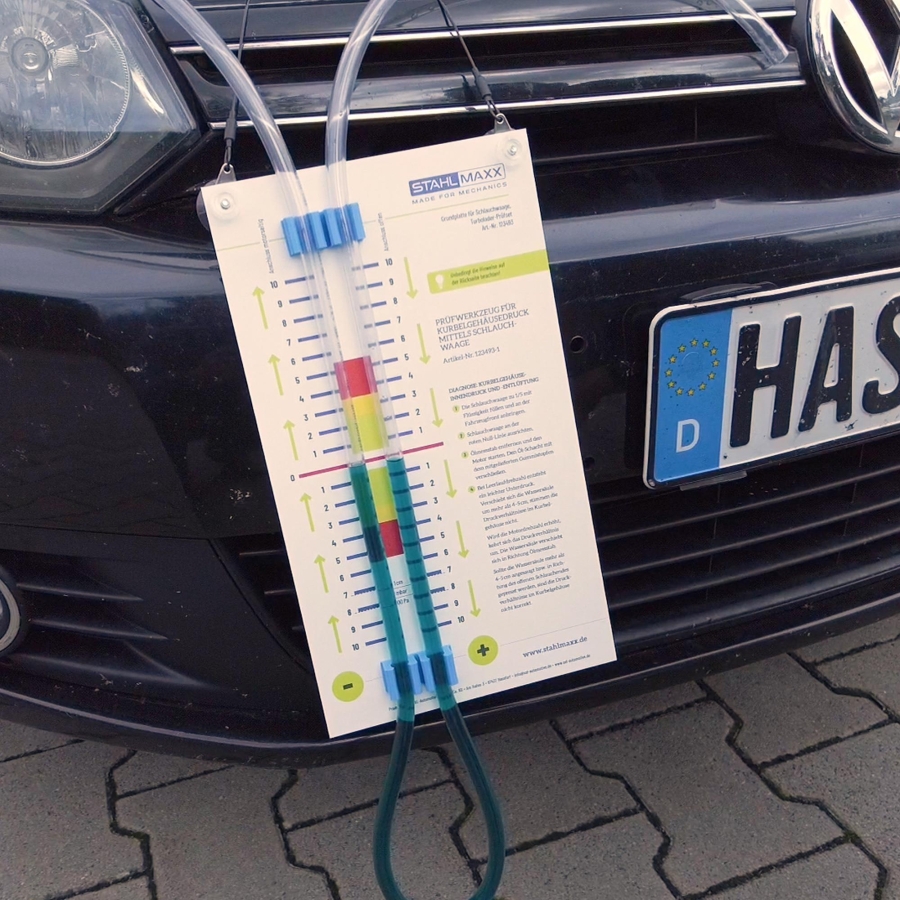
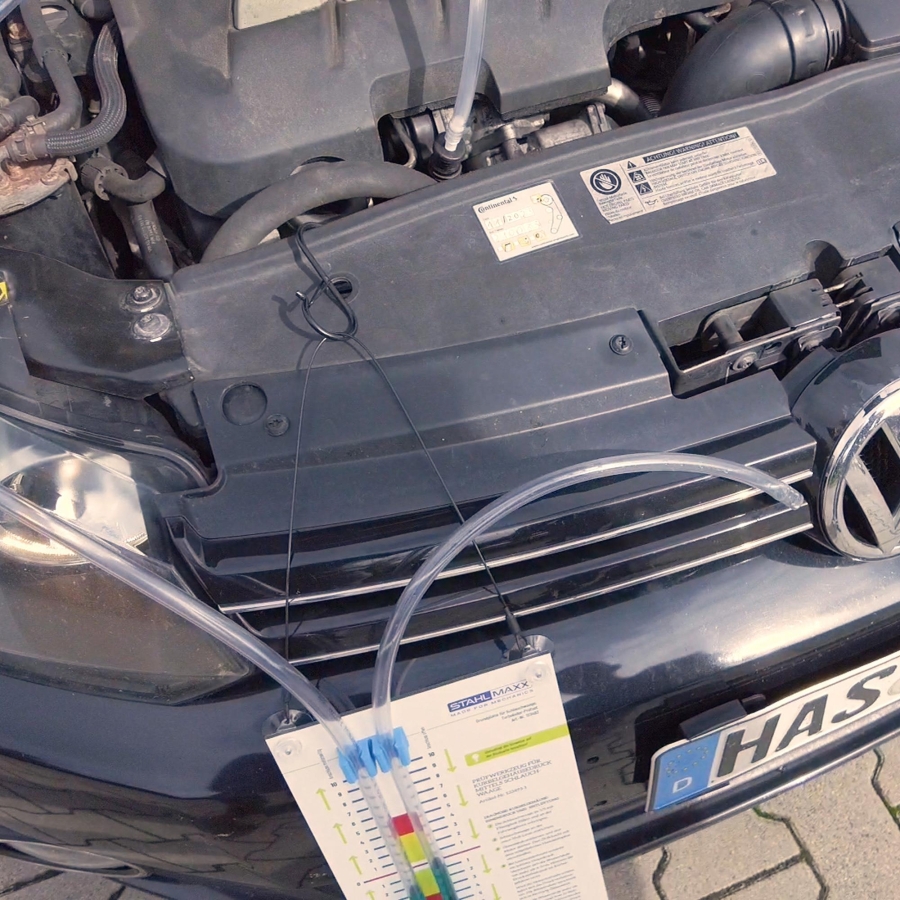
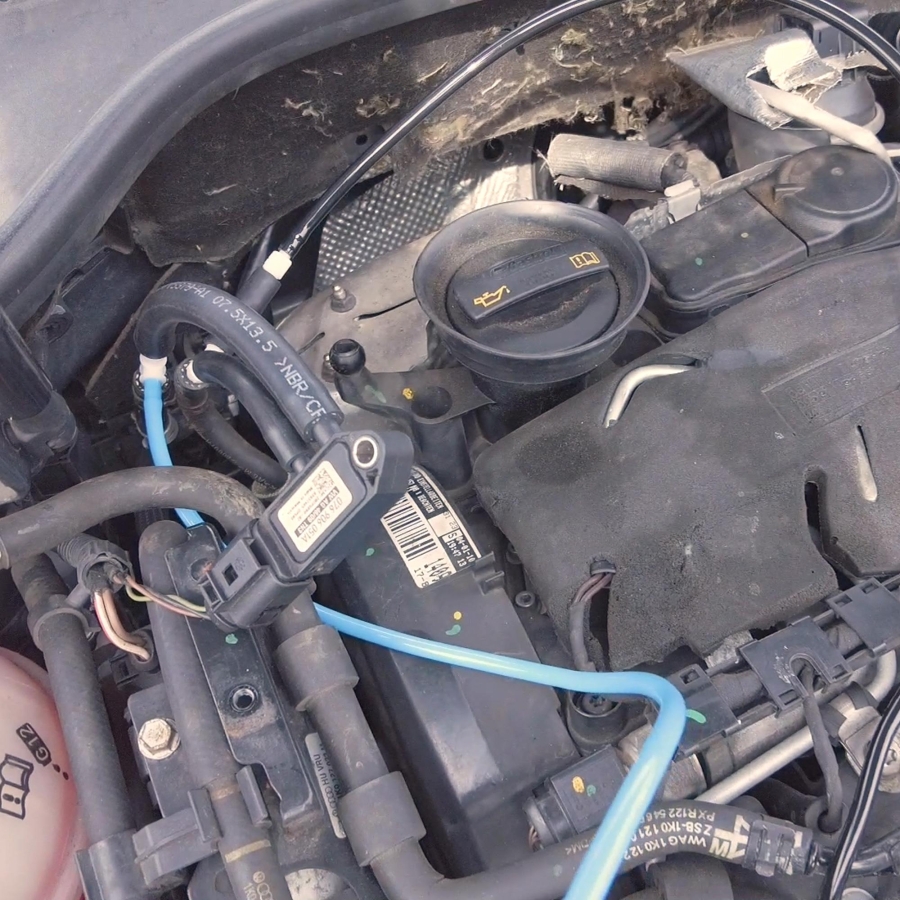
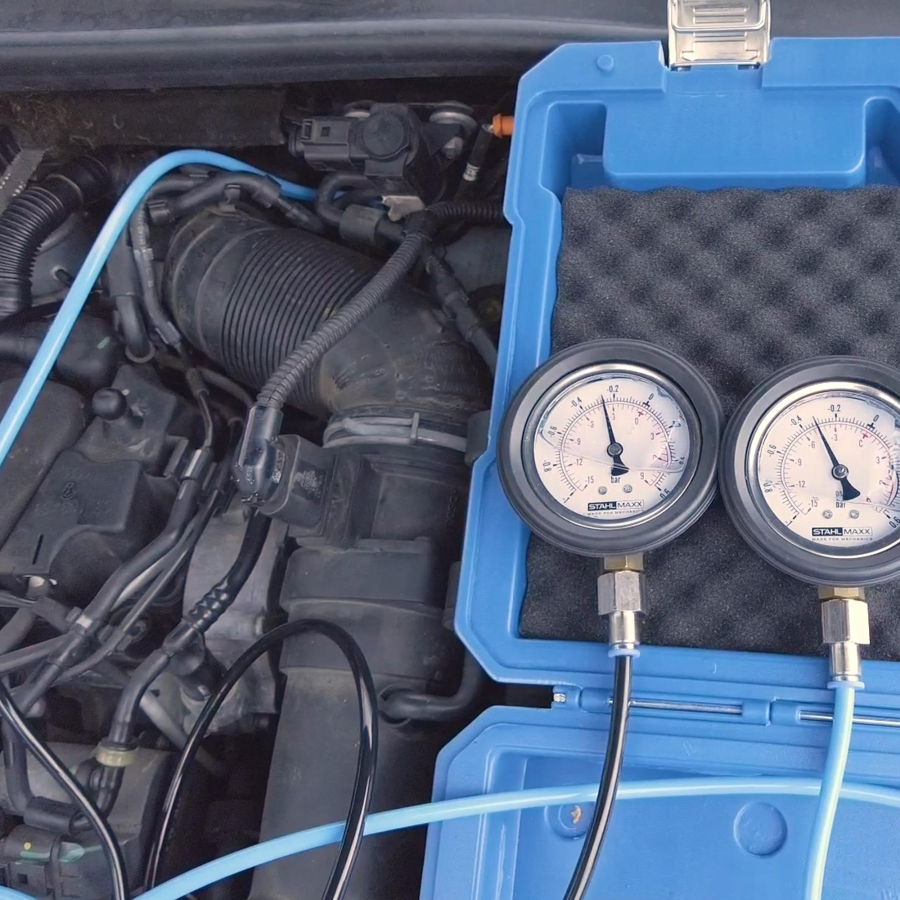
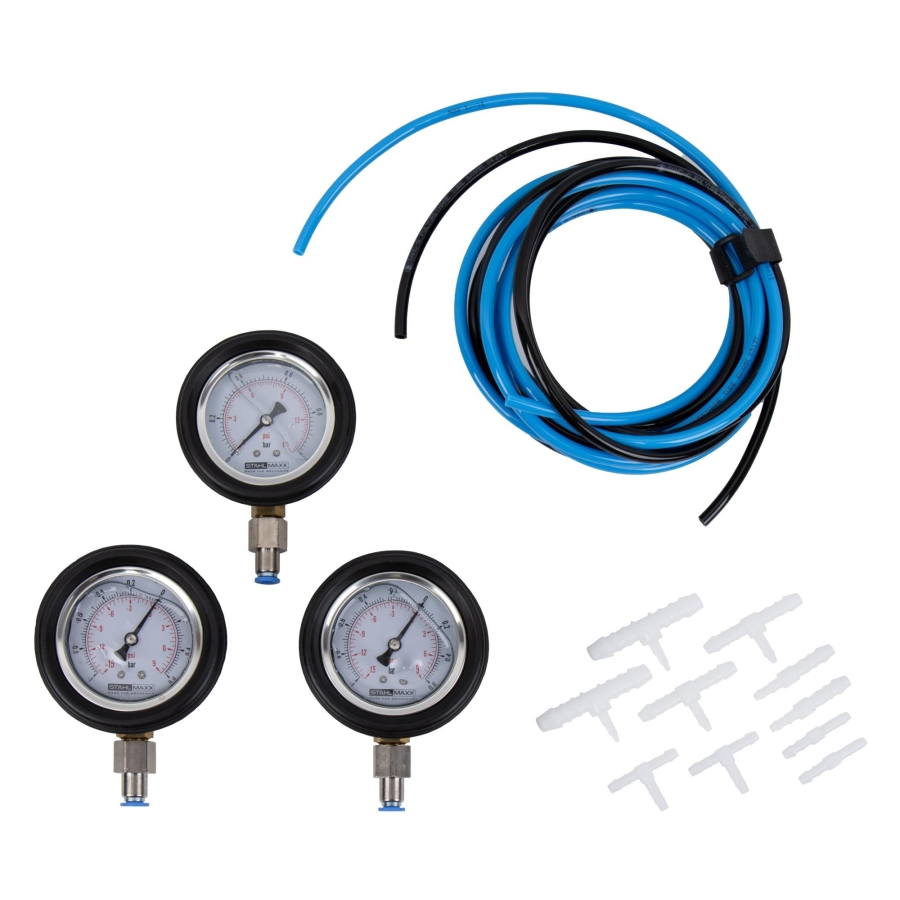
This professional diagnostic tool set has been developed for testing and monitoring various important systems related to particulate filters, turbochargers, boost pressure control systems and crankcase ventilation systems.
The set combines:
- Item No. 123493-1 Crankcase diagnostic tool with hose balance system
- Item No. 123493-2 Diagnostic hose set with analog pressure gauges
For faster workshop operation and simplified use, the most important diagnostic procedures are directly printed on the coated aluminum base plate of the hose balance system.
The system was designed to provide universal functionality and can be adapted to numerous diagnostic tasks using existing universal or vehicle-specific adapters.
Problem Explanation
Modern vehicles use multiple electronically and pneumatically controlled components which perform a variety of functions within engine management systems.
Failures in a single component can create multiple symptoms and complex fault patterns that are often difficult to identify.
Many turbocharger and particulate filter failures are frequently not caused by normal wear.
Replacing the component without proper diagnosis often results in repeated failures.
Typical causes include:
- Oil contamination in charge air systems
- Leaking seals
- Restricted airflow
- Partially blocked or clogged particulate filters
- Insufficient vacuum supply
- Incorrect pressure regulation
- Defective control systems
Without identifying the actual root cause, replacing the failed component alone may not solve the problem.
Solution
This diagnostic tool set enables quick and systematic inspection of important operating conditions and components.
Because measurements are performed using analog values, technicians receive actual measured data that can be directly compared with:
- Vehicle diagnostic scanner data
- OEM specifications
- Manufacturer repair documentation
Long, high-quality hoses allow testing both during stationary operation and during test drives.
This provides more realistic testing conditions and improves diagnostic accuracy.
Diagnostic Functions
The set allows testing of:
✔ Crankcase internal pressure
✔ Crankcase ventilation system
✔ Exhaust back pressure
✔ Turbocharger control pressure at pneumatic actuator
✔ Turbocharger control pressure at pneumatic boost control valve
✔ EGR valve actuator vacuum control
✔ Intake manifold pressure
✔ Vacuum pump performance
✔ Various pressure and vacuum systems
Features
✔ Suitable for stationary and road-test diagnosis
✔ Universal application range
✔ Printed diagnostic instructions on aluminum plate
✔ Analog measurement values for direct comparison
✔ Adaptable with universal and manufacturer-specific adapters
✔ Reduces unnecessary component replacement
✔ Helps identify root causes before repair
Package Contents
Depending on selected package option:
Item No. 123493-1
- 1 × Crankcase diagnostic tool
- 1 × Hose balance system
- 1 × Aluminum plate with printed diagnostic information
- 2 × Connectors
- 1 × Universal cone adapter
Item No. 123493-2
- 1 × Diagnostic hose set for pressure measurement in particulate filter and turbocharger systems
- 3 × Analog pressure gauges
- 10 × Connectors
- 2 × Connection hoses, length 3 m each
Additional:
- 1 × Stahlmaxx storage case (1/3 case included with hose balance system)
Workshop Benefits
- Reduces misdiagnosis and unnecessary component replacement
- Supports diagnosis before expensive repairs
- Enables comparison with OEM values and diagnostic tools
- Improves troubleshooting accuracy
- Suitable for professional workshop applications
OEM numbers are provided only for comparison purposes. This product is not an original manufacturer tool.
Crankcase Internal Pressure and Crankcase Ventilation (CCV) Inspection
Application instructions can be found on the front side of the aluminum plate.
Specific manufacturer specifications regarding maximum permissible crankcase ventilation (CCV) internal pressure are generally not publicly available. Based on practical experience and information from various turbocharger manufacturers, the following values can be used as maximum and reference guidelines:
- A properly functioning crankcase ventilation system should generate:
- Slight positive pressure at idle
- Negative pressure at increased engine speed
- If pressure rises when engine speed increases, a system fault should generally be assumed.
Reference limits:
- Maximum positive pressure: +5 mbar
- Maximum negative pressure: −10 mbar
For turbocharged engines, the crankcase ventilation system must disconnect from the intake system when positive intake manifold pressure is present. Failure to do so may indicate:
- Defective diaphragm
- Faulty control valve
Due to differences in engine design, vacuum control systems, and intake characteristics, pressure values may vary depending on engine type.
Turbocharged Gasoline Engines
Idle speed:
- −90 mbar to −15 mbar
Increased engine speed (3500 RPM):
- −90 mbar to −15 mbar
Driving operation:
- −50 mbar to 0 mbar
- Short-term positive pressure values may be acceptable
Turbocharged Diesel Engines
Idle speed:
- −10 mbar to +5 mbar
Increased engine speed (3500 RPM):
- Approximately −20 mbar
Driving operation:
- −40 mbar to +10 mbar
Exhaust Back Pressure Inspection
Vehicles equipped with a diesel particulate filter (DPF) use a differential pressure sensor. This sensor compares pressure differences before and after the particulate filter and, in some systems, may also reference atmospheric pressure.
Measurement is generally performed using a T-connector connected to the differential pressure sensor.
Testing recommendations:
- Testing should always be performed during vehicle operation under engine load.
- Maximum pressure before the DPF should not exceed +300 mbar.
Measurement after the DPF can provide information regarding faults further downstream in the exhaust system. Depending on the installed system, pressure values may vary, but logical deviations can often quickly indicate faults.
The exhaust system downstream of the DPF should operate with minimal back pressure.
Reference values:
- Manufacturer specifications should be used whenever available.
- On systems equipped with an SCR catalytic converter after the DPF, pressure should not exceed +100 mbar.
- Vehicles equipped with a low-pressure EGR valve should show back pressure below +70 mbar when the valve is open.
Turbocharger Control Pressure at the Pneumatic Boost Control Valve and Actuator
The control valve responsible for operating the actuator, exhaust flap, or variable turbine geometry (VTG) adjustment is frequently a source of various faults.
In most cases, diagnosis through OBD systems alone is not possible.
The technician can simultaneously monitor both input and output values in real-time. Testing can be performed:
- At idle
- During driving operation
If vacuum decreases after repeated brake applications despite the system remaining leak-free, this generally indicates a malfunction of the vacuum pump.