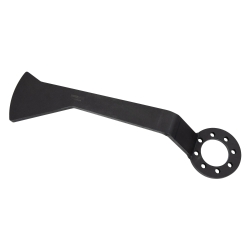
Static Motorcycle Wheel Balancer
-
Code:8459
-
Weight:4.870 Kgs
Overview:
✔ Cost-effective alternative to an electric wheel balancing machine
✔ Enables static balancing of motorcycle wheels
✔ Suitable for wheels up to 740 mm in diameter and 320 mm in width
✔ Two centring cones for wheel centre bores from 17 to 29 mm
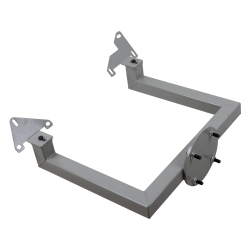
✔ Painted steel frame with carbon-steel balancing shaft
✔ Precision ball bearings provide low-friction movement
✔ Designed for accurate identification and correction of wheel imbalance

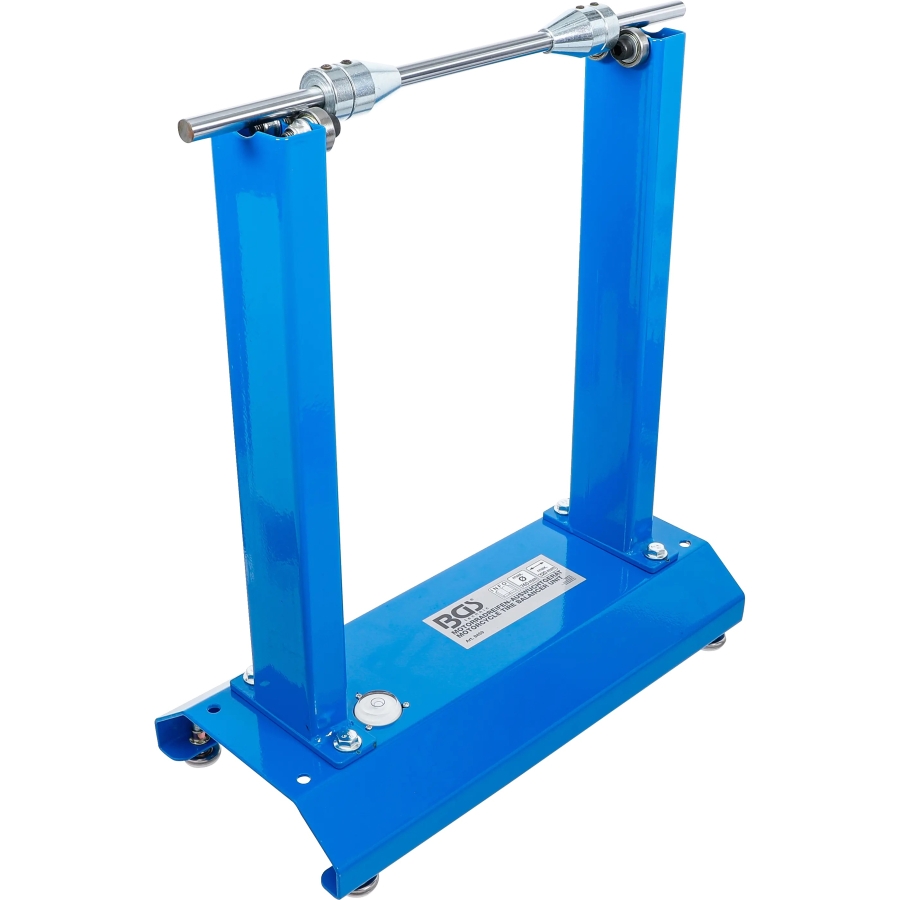
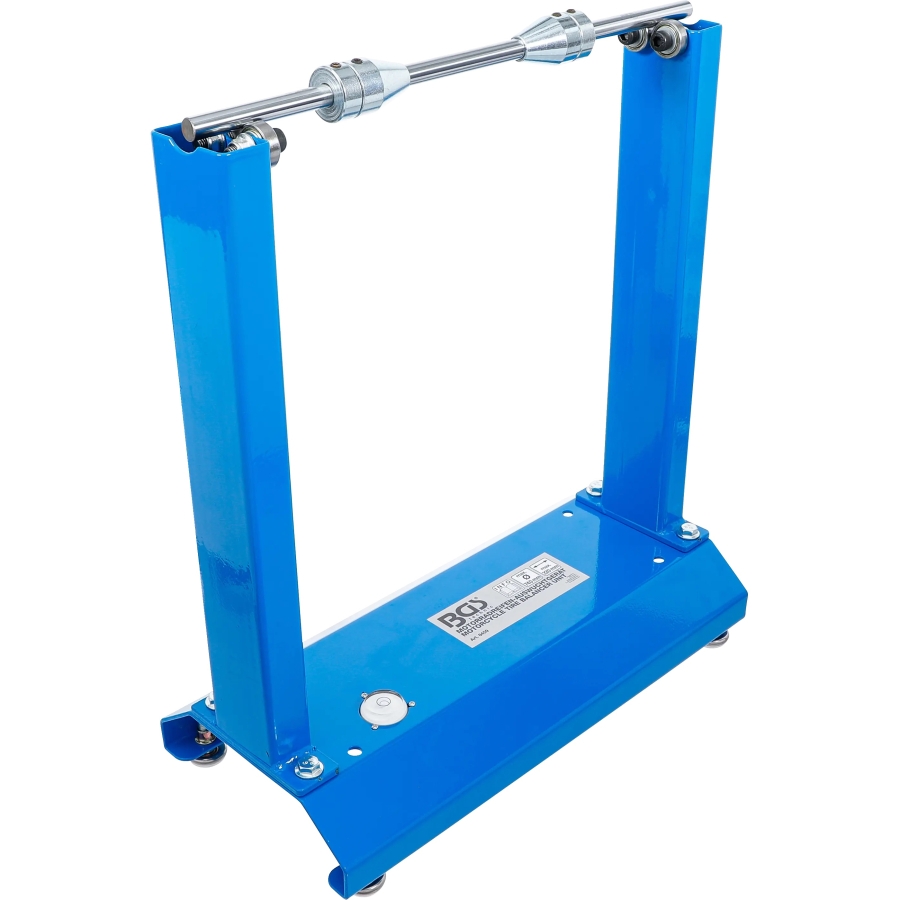
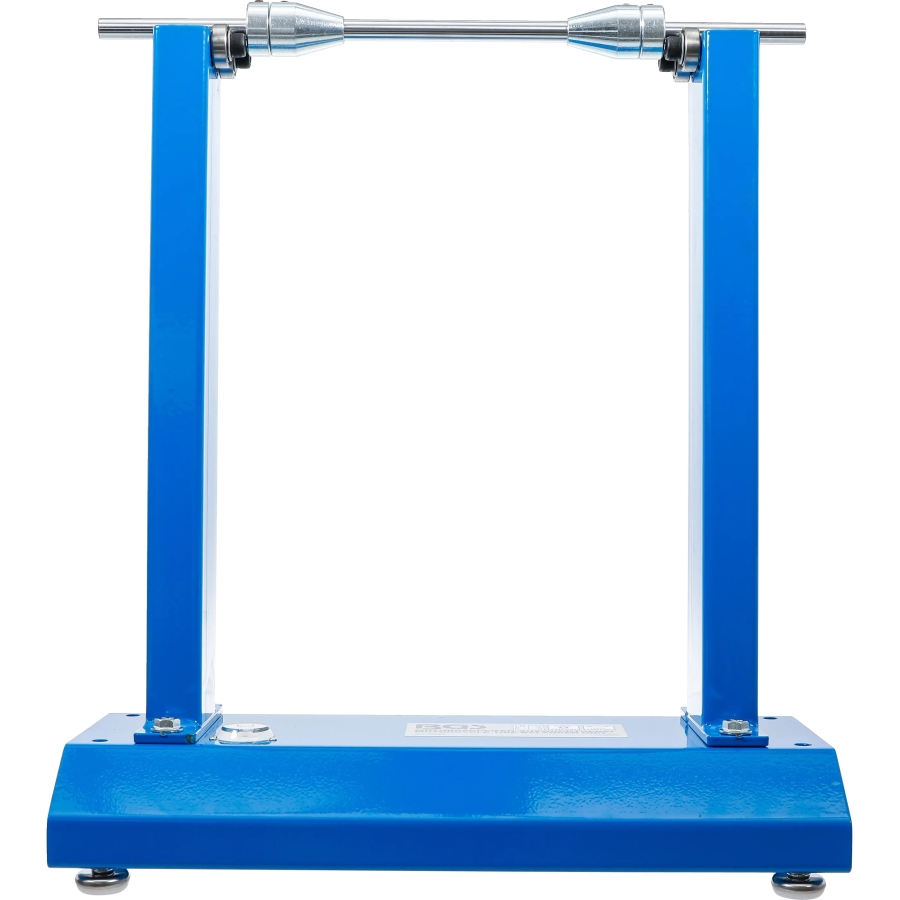
The device enables motorcycle wheels to be balanced statically without the need for an electric balancing machine.
It accommodates motorcycle wheels with a maximum diameter of 740 mm and a maximum width of 320 mm.
Wheel Centring
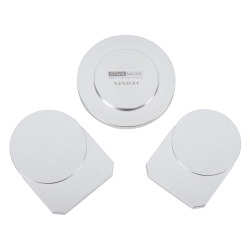
Two centring cones secure and centre the wheel on the balancing shaft.
The cones are suitable for wheel centre bores with a diameter from 17 to 29 mm.
Low-Friction Bearings
Precision ball bearings allow the balancing shaft and wheel to move freely with minimal resistance.
This sensitive pendulum movement helps identify the heaviest point of the wheel for precise static balancing.
Construction
- Painted steel frame
- Carbon-steel balancing shaft
- Precision ball bearings
- Two adjustable centring cones
Technical Specifications
- Balancing method: static
- Maximum wheel diameter: 740 mm
- Maximum wheel width: 320 mm
- Centring range: 17–29 mm
- Frame material: painted steel
- Balancing shaft material: carbon steel
Scope of Delivery
- 1 motorcycle wheel balancer with balancing shaft
- 2 centring cones, 17–29 mm range
1. Mount and Centre the Wheel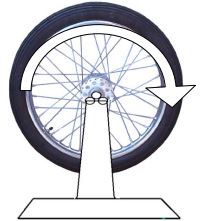
Insert the balancing shaft through the wheel hub bearings and centre the wheel using the two centring cones.
Secure the centring cones on the shaft with the locking collars. Then place the balancing shaft with the mounted wheel onto the precision bearings.
Make sure the wheel can rotate freely without touching the frame or encountering resistance.
2. Identify the Imbalance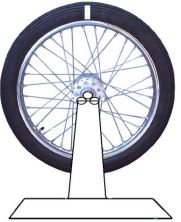
Allow the wheel to rotate freely. If an imbalance is present, the heavier section will move downwards. The wheel may oscillate for a short time before stopping with the heaviest point at the 6 o’clock position.
Mark the lightest point at the 12 o’clock position with chalk.
Turn the wheel by 90° so that the chalk mark is positioned at either 3 or 9 o’clock. Release the wheel and observe whether the marked point moves upwards again.
3. Add Weights and Check the Balance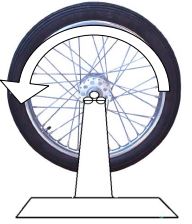
Attach suitable spoke clip-on weights or adhesive rim weights at the marked light section to compensate for the imbalance.
Repeat the test by placing the wheel in several different positions. The wheel is correctly balanced when it remains stationary in every position and no longer rotates by itself.
When using adhesive weights, distribute the required weight evenly between the left and right sides of the rim.