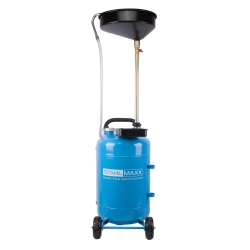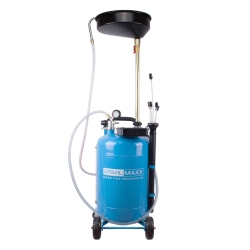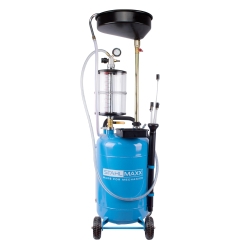
Mobile Waste Oil Drainer and Extractor with Inspection Chamber, 80 L
-
Code:118764
-
Weight:38.625 Kgs
Overview:
✔ Collects oil by gravity or extracts it using pneumatic vacuum
✔ 70 L tank and transparent 10 L inspection chamber with graduated scale
✔ Allows visual inspection of extracted oil and measurement of its volume
✔ Five flexible nylon extraction probes with holder
✔ Height-adjustable collection funnel and handle
✔ Tank level indicator and compressed-air emptying
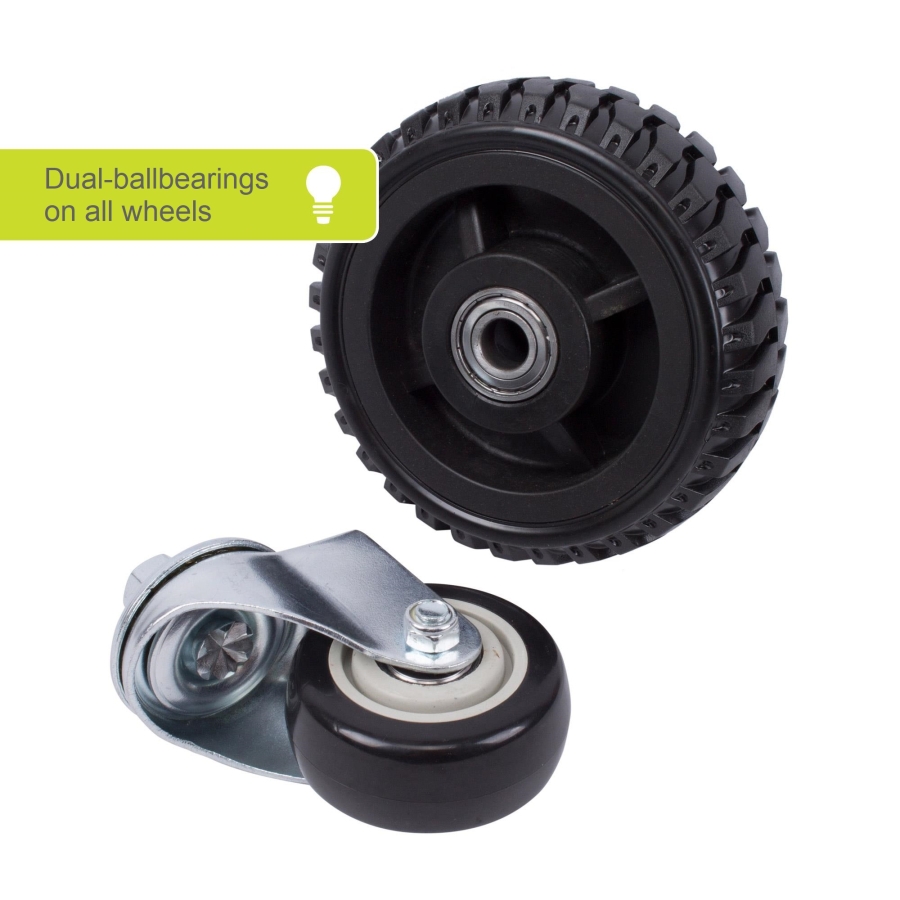
✔ Four ball-bearing wheels, including two swivel castors


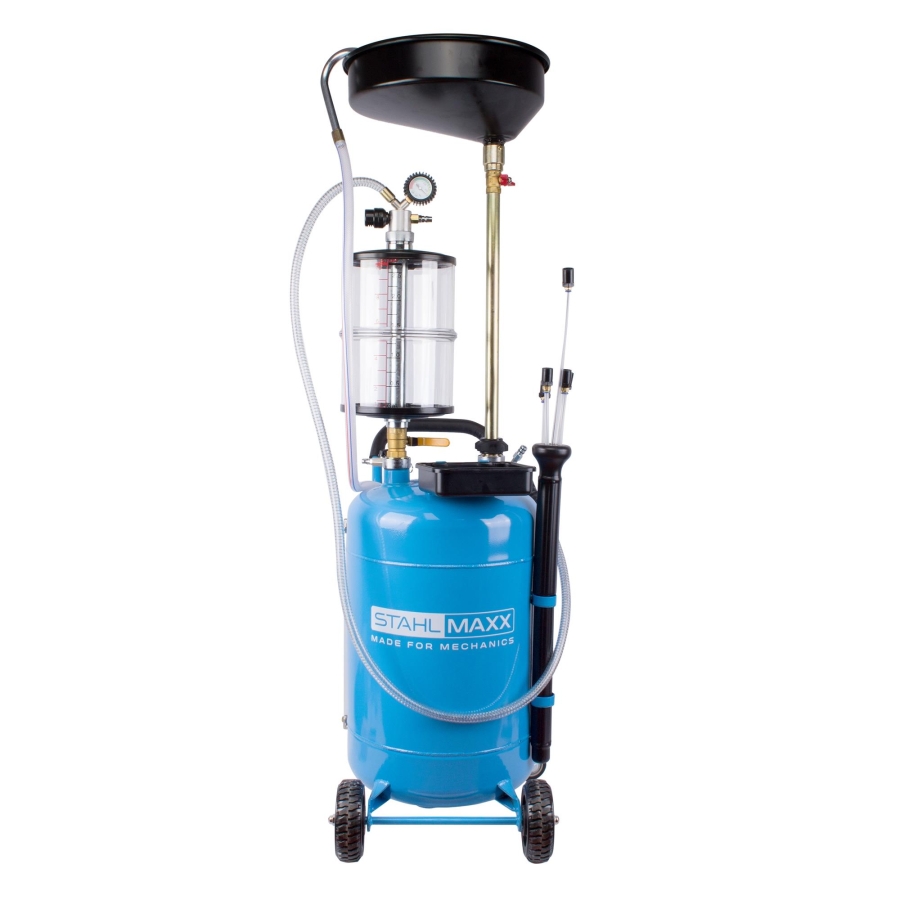
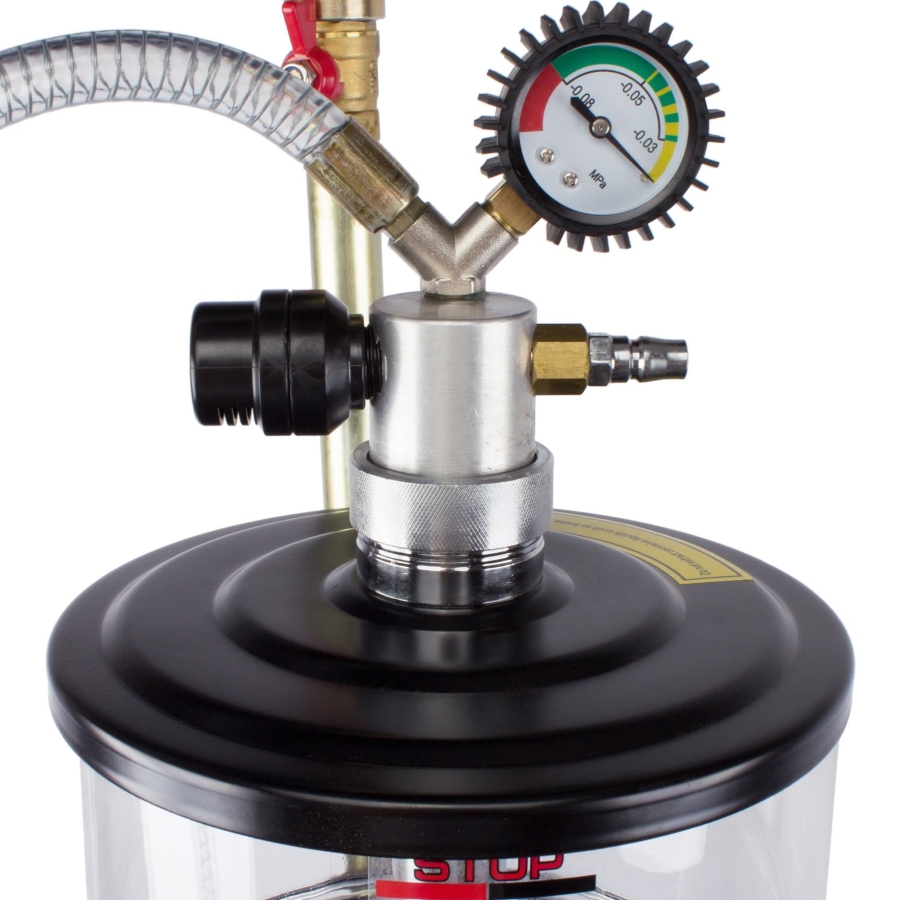
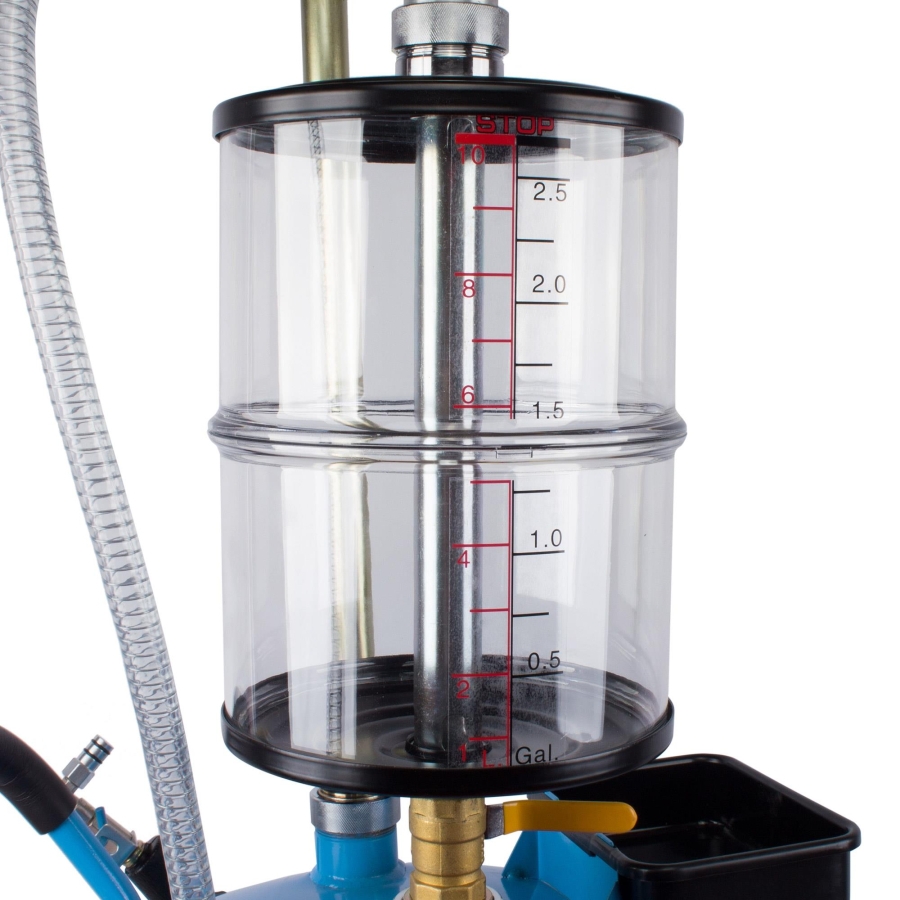
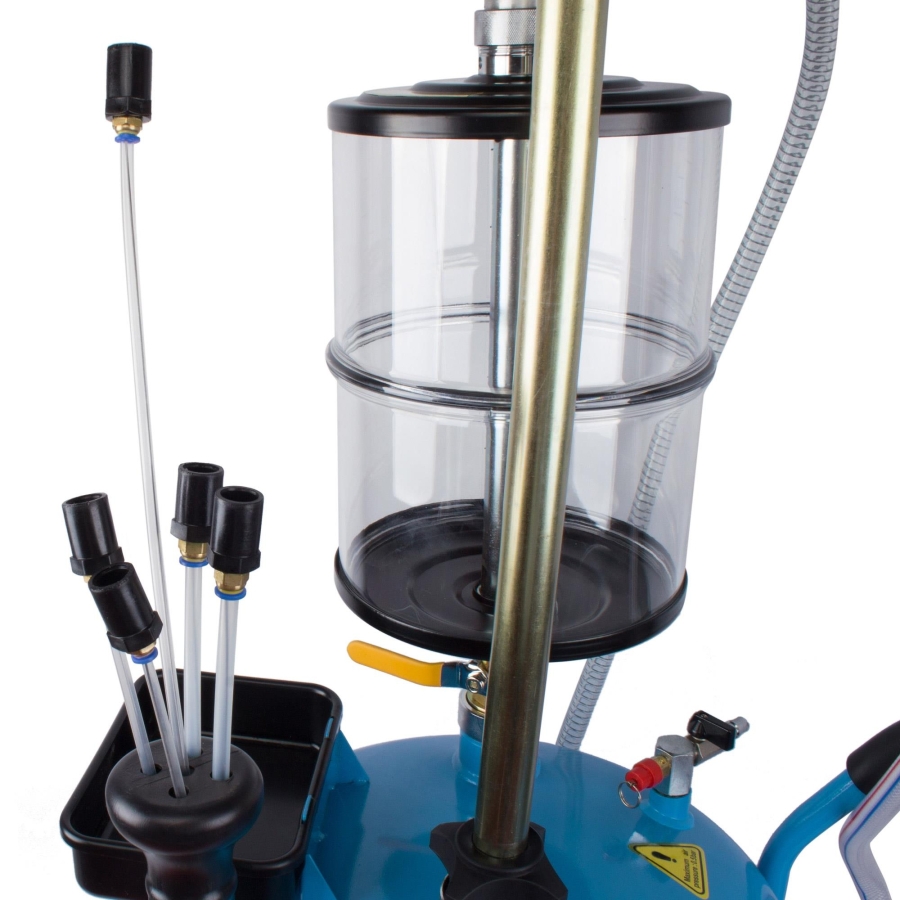
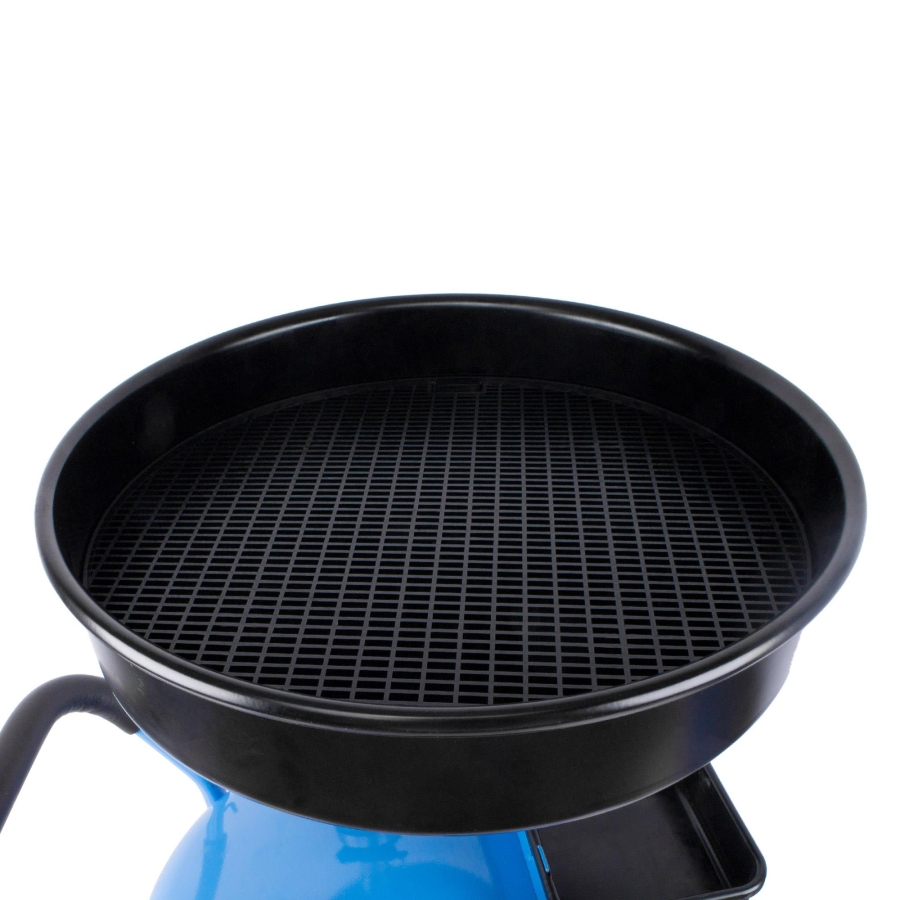
This mobile unit combines gravity collection and vacuum extraction of waste oil. It has a 70 L tank and a separate 10 L inspection chamber, providing a combined capacity of 80 L. The transparent chamber allows the extracted oil volume to be measured and visible contamination to be checked.
Flexible nylon extraction probes in different lengths and diameters allow use with a range of vehicles.
Oil collection and height adjustment
The collection funnel is mounted on a telescopic tube for height adjustment and includes a collection grid. The handle is also height-adjustable.
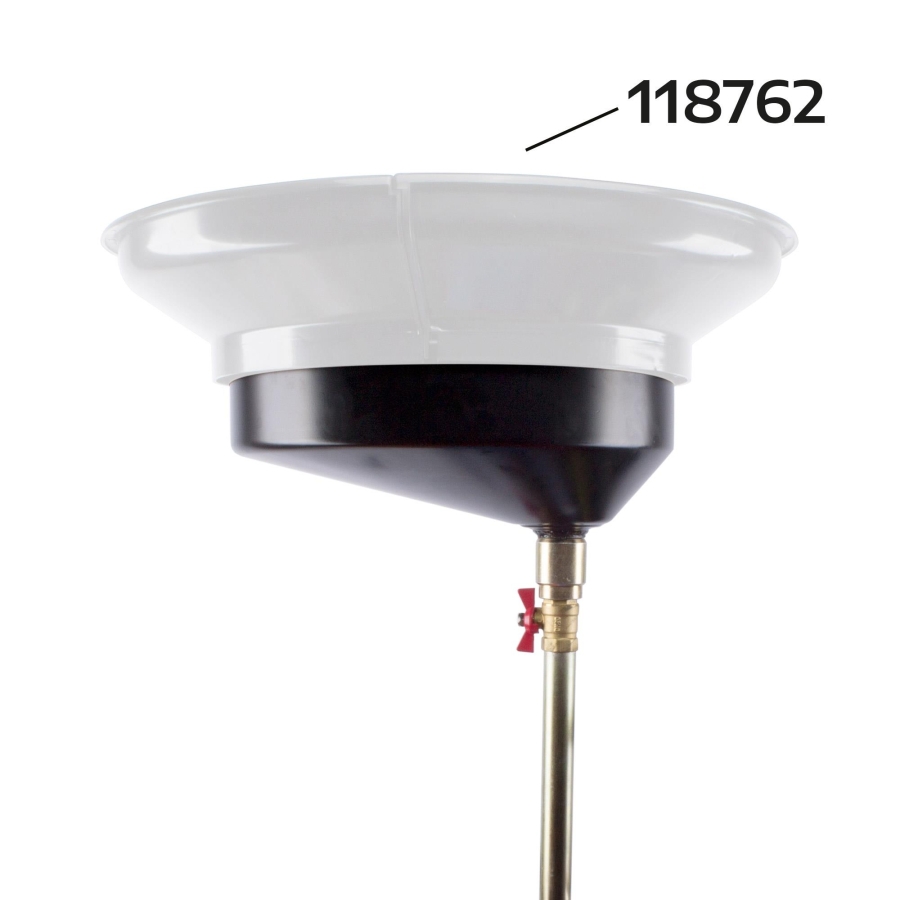
The round funnel has a diameter of 400 mm and can be expanded to 600 mm with the optional collection funnel, Item no. 118762.
Tank monitoring and emptying
A level indicator allows the oil quantity in the main tank to be monitored. The tank is emptied using compressed air at a discharge pressure of 0.5 bar.
The unit includes a safety valve, shut-off valve and clamping screw for pressure emptying.
Mobility and storage
Four ball-bearing wheels, including two swivel castors, allow the unit to be moved around the workshop. A plastic tray provides storage for small parts, while the extraction probes are supplied with a holder.
Technical specifications
- Extraction rate: 1.8–3.0 L/min
- Height adjustment: 1,400–1,600 mm
- Minimum height with inspection chamber fitted: 1,230 mm
- Tank capacity: 70 L
- Inspection chamber capacity: 10 L
- Collection funnel diameter: 400 mm
- Oil discharge pressure: 0.5 bar
- Working air pressure: 6–8 bar
- Oil drain hose length: 1.5 m
- Extraction hose length: 2 m
- Dimensions: Approx. 500 × 500 × 1,350 mm (L × W × H)
- Maximum oil temperature: 80 °C
Scope of delivery
- Item no. 118757 – 1 × Mobile waste oil drainer with 70 L tank
- Item no. 118758 – 1 × Vacuum unit with 2 m extraction hose and shut-off valve
- Item no. 118760 – 5 × Highly flexible nylon extraction probes with holder
- Item no. 118761 – 1 × Transparent 10 L inspection chamber with graduated scale
These instructions apply to the mobile waste oil drainer and extractor, Item no. 118764.
Assembly
Rubber seals may be treated with silicone, and threaded connections should be assembled using a suitable sealant.
- Insert the handle into its mounting bracket and tighten the screws.
- Fit the wheels onto the axle tubes and install the swivel castors from below into their brackets. Tighten the nuts.
- Insert the collection funnel’s telescopic tube into its opening and secure it with the clamping nut. Fit and secure the collection funnel onto the shut-off valve.
- Attach the plastic small-parts tray to its bracket.
- Install the inspection chamber and vacuum unit in the designated position according to the manufacturer’s parts diagram, paying attention to the ball shut-off valve.
- Attach the cylindrical probe holder to the side bracket.
- Check that all connections are secure and close all ball valves to prevent unintended leakage.
Adjusting the collection funnel
The telescopic tube allows the collection funnel to be adjusted in height and swivelled around.
The funnel can be expanded to a diameter of 600 mm using the optional collection funnel, Item no. 118762. The wider collection area helps catch oil when removing the oil filter and draining the engine at the same time.
The extraction probes connect directly to the extraction hose.
Collecting oil by gravity
- Position the unit beneath the expected oil outlet.
- Adjust the funnel height using the telescopic tube.
- If the oil does not need to be inspected, open the ball valve to allow it to drain into the main tank.
- Close the ball valve once draining is complete.
Extracting oil by vacuum
The vacuum generator uses the Venturi effect: compressed air flowing through the generator creates suction for extracting oil.
- Select the largest extraction probe suitable for the vehicle and connect it to the extraction hose.
- Close all valves, then open only the valve leading to the extraction probe hose.
- Connect the compressed-air supply to the vacuum generator and open its inlet valve.
- Adjust the vacuum using the shut-off valve.
- Use the transparent inspection chamber to check the extracted oil’s volume and visible condition, if required.
Monitor the pressure/vacuum gauge during operation. The needle must never enter the red zone. The working air pressure for the vacuum system is 6–8 bar.
Emptying by gravity
- Close all shut-off valves.
- Place the discharge hose into a suitable waste oil container.
- Open the discharge valve and allow air into the tank through the small valve at the pressure-relief assembly.
- Oil flows out by gravity until the liquid levels equalise.
Emptying with compressed air
- Close all shut-off valves, particularly those for the collection funnel and inspection chamber.
- Place the discharge hose into a suitable waste oil container.
- Hold or secure the curved discharge outlet. Escaping air can cause it to move, particularly towards the end of emptying.
- Connect the compressed-air supply to the pressure regulator used for tank emptying.
- Open the discharge hose valve and use the small valve at the pressure-relief assembly to pressurise the tank.
- The regulator supplies approximately 0.5 bar to the tank to discharge the oil.
The tank-emptying pressure is approximately 0.5 bar. The 6–8 bar working air pressure specified for vacuum generation must not be applied directly to the tank.
Permitted use and precautions
Read the operating instructions carefully before use and retain them for future reference. Regular inspection and maintenance are essential for reliable operation.
- The unit is approved only for extracting, collecting and disposing of oil. Pneumatic operation does not constitute approval for use with other flammable liquids.
- Do not collect or extract corrosive liquids.
- Position and operate the unit on a level surface.
- Do not exceed an oil temperature of 80 °C.
- Follow the applicable handling precautions for the oil being collected.
- Dispose of all collected liquids in accordance with applicable requirements.
- Do not mix liquids that require separate storage or disposal.
- Keep the unit and its components away from hot surfaces and flames, and protect them from adverse environmental conditions.
- Do not carry out unauthorised repairs to the pressure vessel or safety valves.
Checks before use
- Check that all connections are secure and leak-tight against both air and oil.
- Inspect the unit and its components for visible damage.
- Use the vacuum generated by the unit to check for leaks. If a leak is detected, contact the manufacturer.
- Keep the unit clean so that damage and leaks can be identified.
- Monitor the pressure/vacuum gauge throughout operation. The needle must never enter the red zone.
Regular maintenance and storage
- Inspect the unit and its connections regularly for air and oil leaks.
- Empty the inspection chamber when the unit is not in use.
- Close the ball valves when the unit is not in use.
- Keep the collection funnel, inspection chamber, hoses and probes clean.
- Have faults affecting the pressure vessel or safety valves assessed by the manufacturer or an authorised service provider.