Exhaust Back Pressure Gauge – Accurate Turbo & EGR Diagnostics
-
Code:9468
-
Weight:2.366 Kgs
This exhaust back pressure gauge allows precise measurement of exhaust pressure in diesel and petrol engines. It connects directly to the lambda sensor thread or EGR valve to identify blockages, restricted flow, or catalytic converter/DPF issues before they damage the turbocharger.

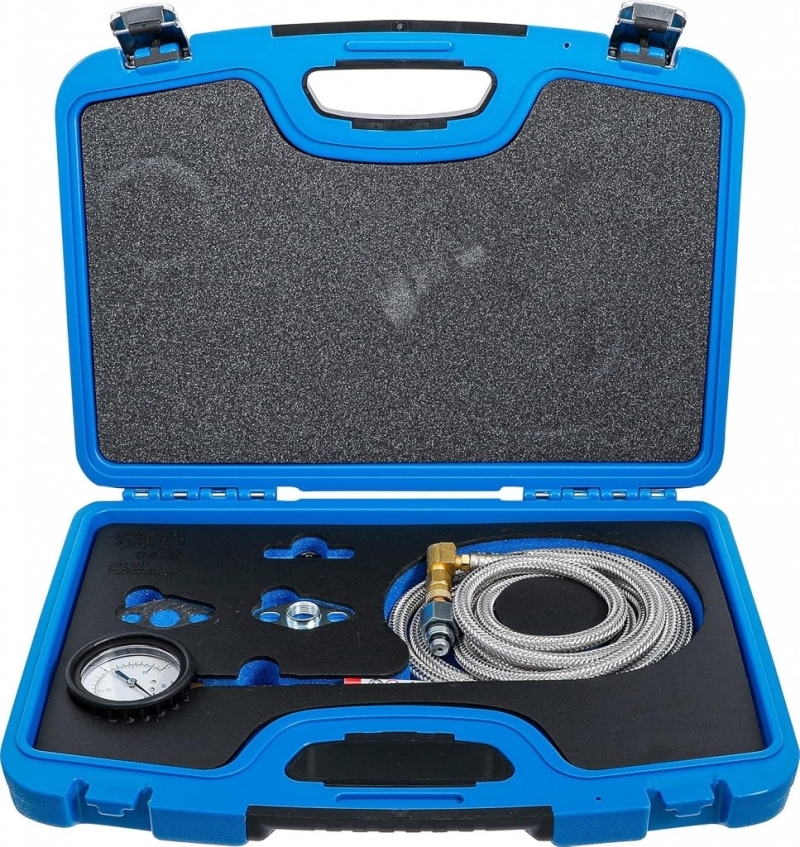
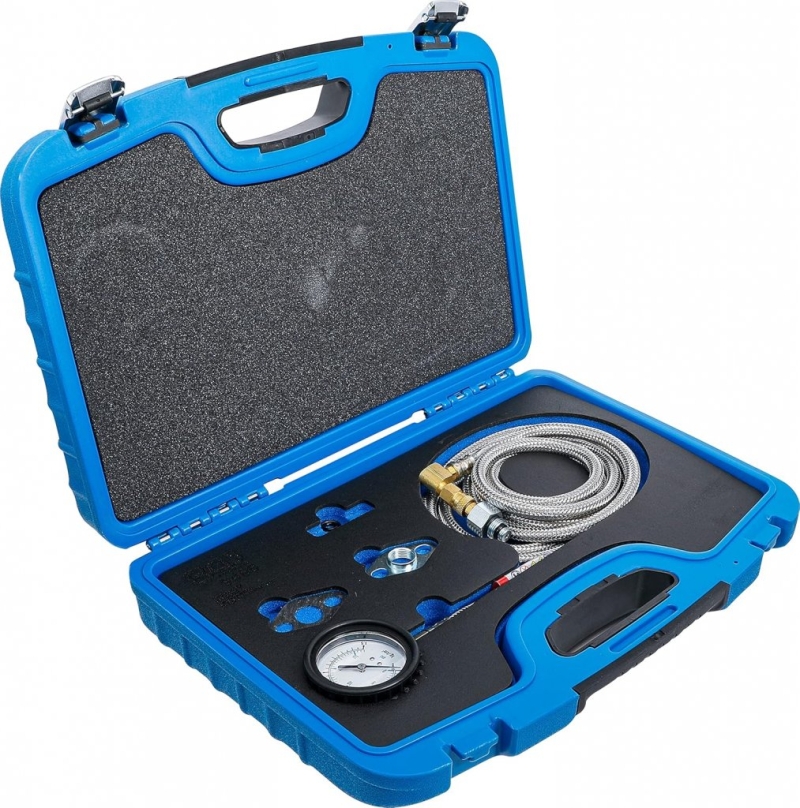
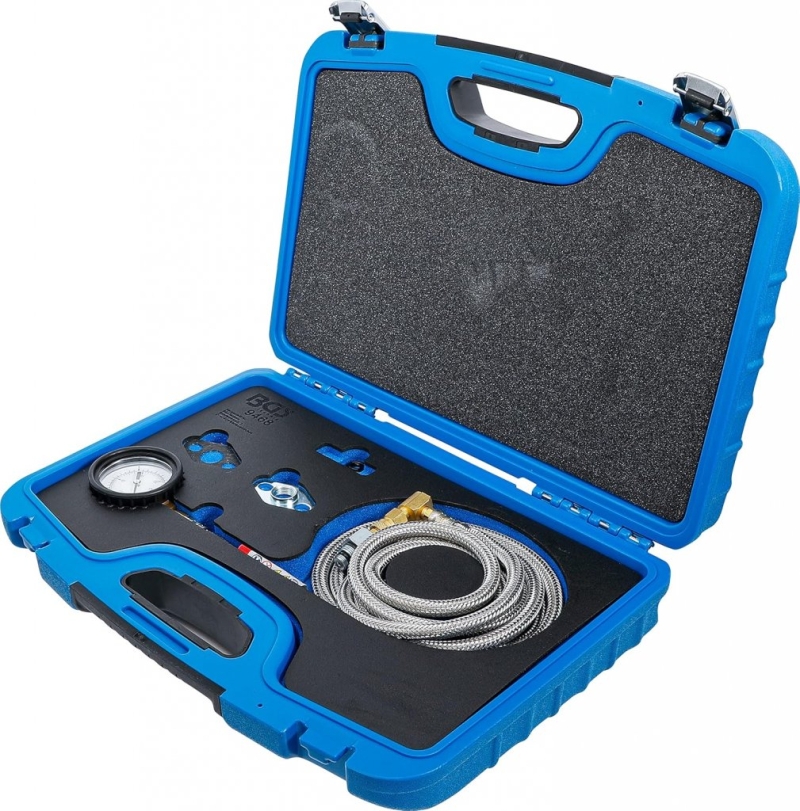
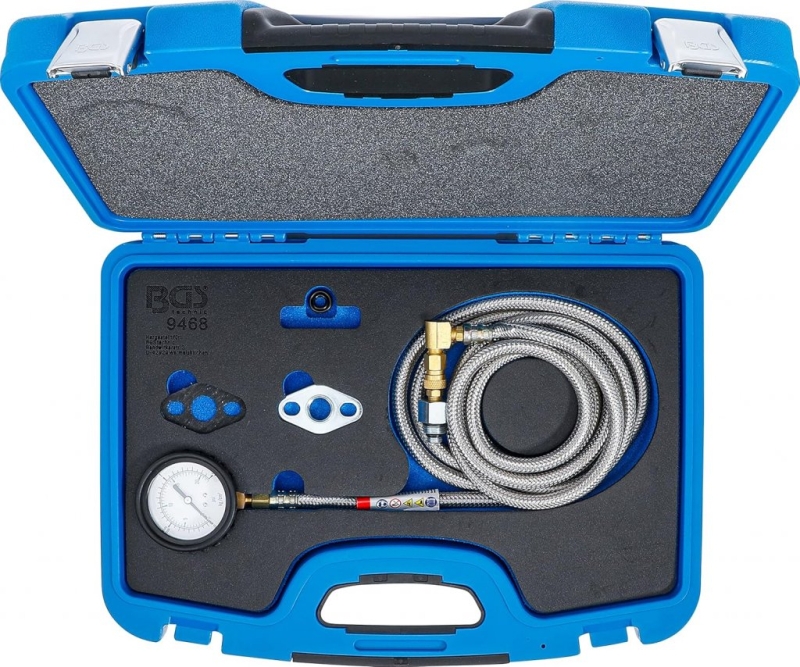
The exhaust back pressure gauge is an essential tool for professional workshops and automotive diagnostics. Elevated exhaust back pressure can cause excessive turbocharger temperatures, axial forces on the turbine shaft, and bearing wear, potentially leading to total turbo failure.
This tester connects via threaded adapters to the lambda sensor port (M12x1.25 / M18x1.5) or the EGR valve, providing an accurate measurement of back pressure. Readings are displayed on a color-coded manometer in both kg/cm² and PSI for clear interpretation. The 1.9 m reinforced hose ensures durability during repeated use.
Key Advantages:
-
Accurate detection of exhaust flow restrictions or blockages
-
Prevents turbocharger and engine damage
-
Connects to lambda sensor thread or EGR valve for flexibility
-
Color-coded manometer for easy reading (kg/cm² & PSI)
-
Reinforced pressure hose for durability and reliability
-
Suitable for both petrol and diesel engines
Technical Specifications:
-
Manometer: Ø 57 mm, 0–1.5 kg/cm² | 0–23 PSI
-
Pressure hose: 1.9 m, with steel mesh reinforcement and quick coupling
-
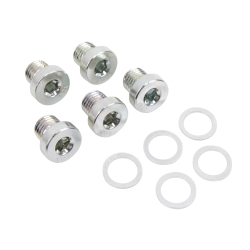
Lambda sensor adapters: M12x1.25, M18x1.5 external thread
-
Exhaust pipe adapter: M18x1.5 internal thread, flange 37x63 mm, hole spacing 36–45 mm
Applications:
-
Exhaust system diagnostics
-
Turbocharger performance checks
-
EGR and lambda sensor troubleshooting
-
Catalytic converter and DPF inspections
Preparation – Pressure Test via EGR Valve Flange (Adapter 3):
-
Remove the EGR (Exhaust Gas Recirculation) valve.
-
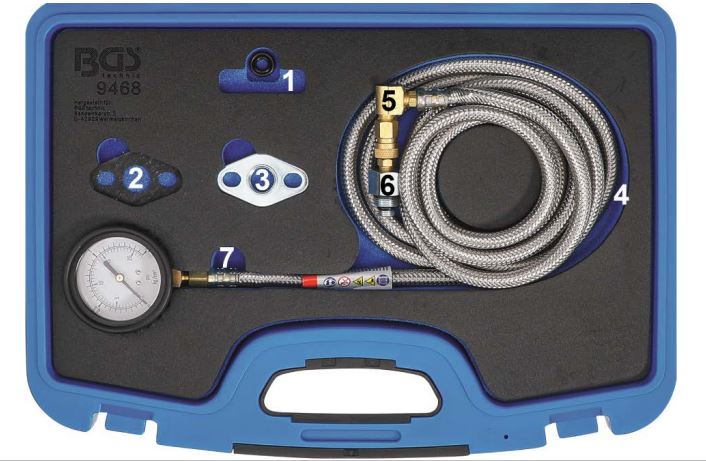
Mount the EGR adapter (3) with the gasket (2) onto the exhaust manifold.
-
Insert the lambda sensor adapter (5) into the EGR adapter (3).
Note: Ensure proper seating and sealing of O-rings. -
Connect the quick coupling (6) with the lambda sensor adapter (7).
Preparation – Pressure Test via Lambda Sensor Thread (Adapter 5):
-
Remove the lambda sensor.
-
Insert the lambda sensor adapter (5) into the sensor thread.
Note: Ensure proper seating and sealing of O-rings. -
Connect the quick coupling (6) with the lambda sensor adapter (7).
Pressure Test Procedure:
-
Start the engine and let it idle.
-
Read the pressure value on the gauge; it should not exceed 0.09 bar (1.25 PSI).
-
If the value is higher, investigate potential causes, such as restrictions or blockages in downstream catalytic converters.
-
If the pressure is below 0.09 bar, perform a test at higher engine speed.
-
Increase engine speed to 2500 RPM.
-
Read the pressure value again; it should not exceed 0.21 bar (3 PSI).
-
If the value is higher, further investigation is required, e.g., checking for restricted or blocked downstream catalytic converters.
Important Notes:
-
Vehicles with a Y-shaped exhaust and subsequent catalytic converter require measurement before each catalyst.
-
Vehicles with two sequential catalytic converters require testing before each converter.
-
For dual exhaust systems, test each side of the exhaust and before every catalytic converter.
| File | Info |
|---|---|
 Instructions BGS9468
|
[PDF, 878.76 KB] |