





Date: 29 Jun 2026
Ford 2.0 EcoBlue Wet Timing Belt Replacement: Tools, Puller Versions and Workshop Procedure
Replacing the timing belt on a Ford 2.0 EcoBlue TDCi requires more than a conventional timing-tool set. The belt operates in engine oil, the crankshaft pulley design has changed during production, and several stages of the repair require model-specific special tools.
This guide provides an overview of the main workshop procedure, the tools required and the differences between the crankshaft pulley pullers used on engines produced before 2019, from 2019 onward and from 2023 onward.
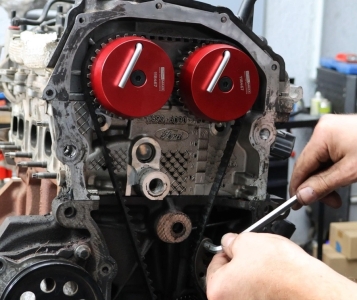
The challenge of a timing belt running in oil
Unlike a conventional dry timing-belt system, the Ford EcoBlue belt operates inside the engine and is continuously exposed to engine oil. This design places greater importance on the condition and specification of the oil used in the engine.
- The engine must be operated with the correct oil specification.
- Fuel dilution can reduce the protective properties of the oil and affect the belt material.
- Belt deterioration may not be visible without opening the timing system.
- Material separation or missing teeth can result in serious timing errors and engine damage.
Inspect more than the belt
When a damaged belt is found, the underlying cause should also be investigated. Incorrect oil, extended service intervals, fuel dilution and unresolved injection or regeneration problems may all contribute to premature deterioration.
Special tools required for the repair
A correct repair requires tools for locking, positioning, holding and removing the relevant engine components. Depending on the exact vehicle and engine version, the required equipment normally includes:
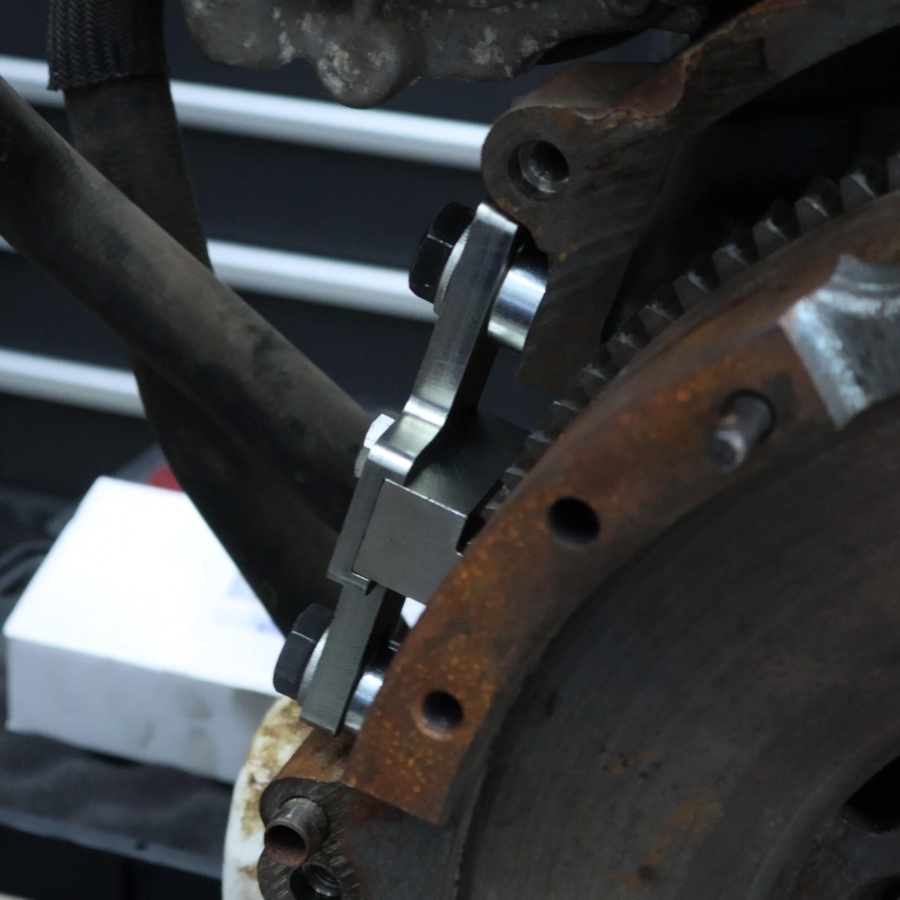
- A flywheel locking tool installed in place of the starter motor.
- Crankshaft and camshaft locking tools for accurate engine positioning.
- Positioning pins and fixing bolts for the applicable engine version.
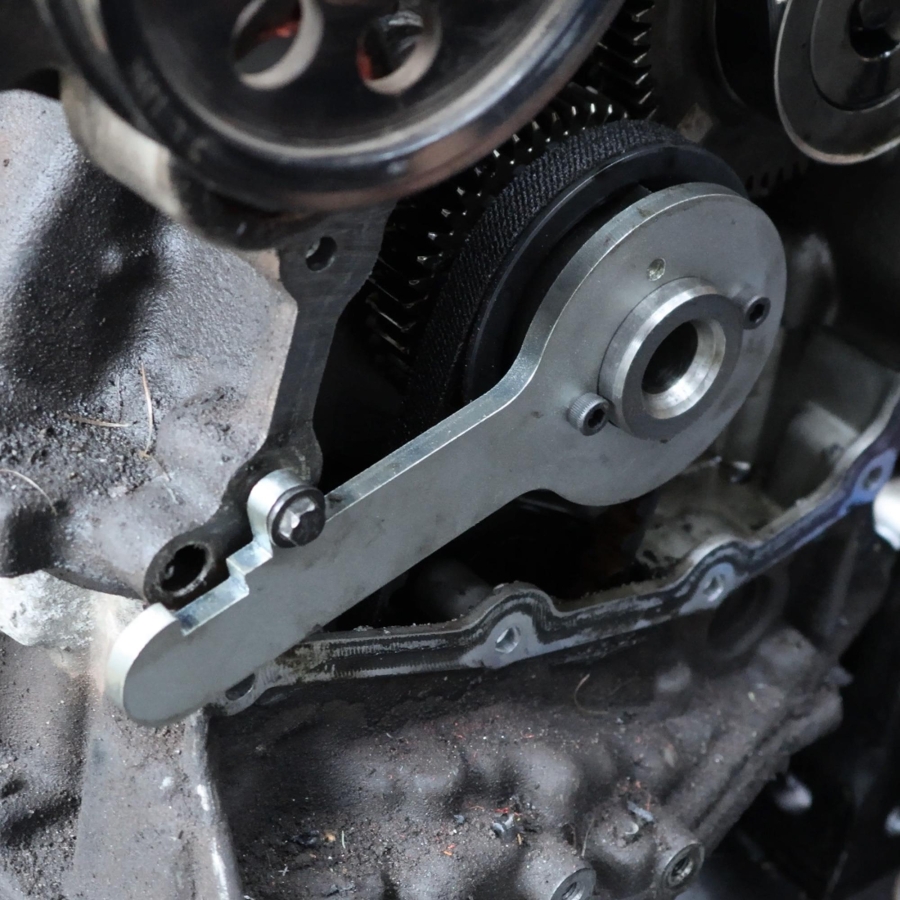
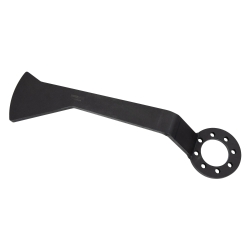
- A crankshaft counter-holding tool for controlled loosening and tightening.
- Tapered timing-belt installation sleeves, such as Ford 303-1650.
- A front-cover separation tool to protect the sealing surfaces.
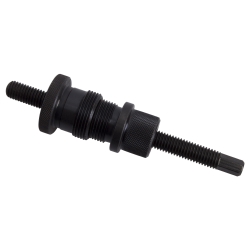
- The correct crankshaft pulley puller for the production version of the engine.
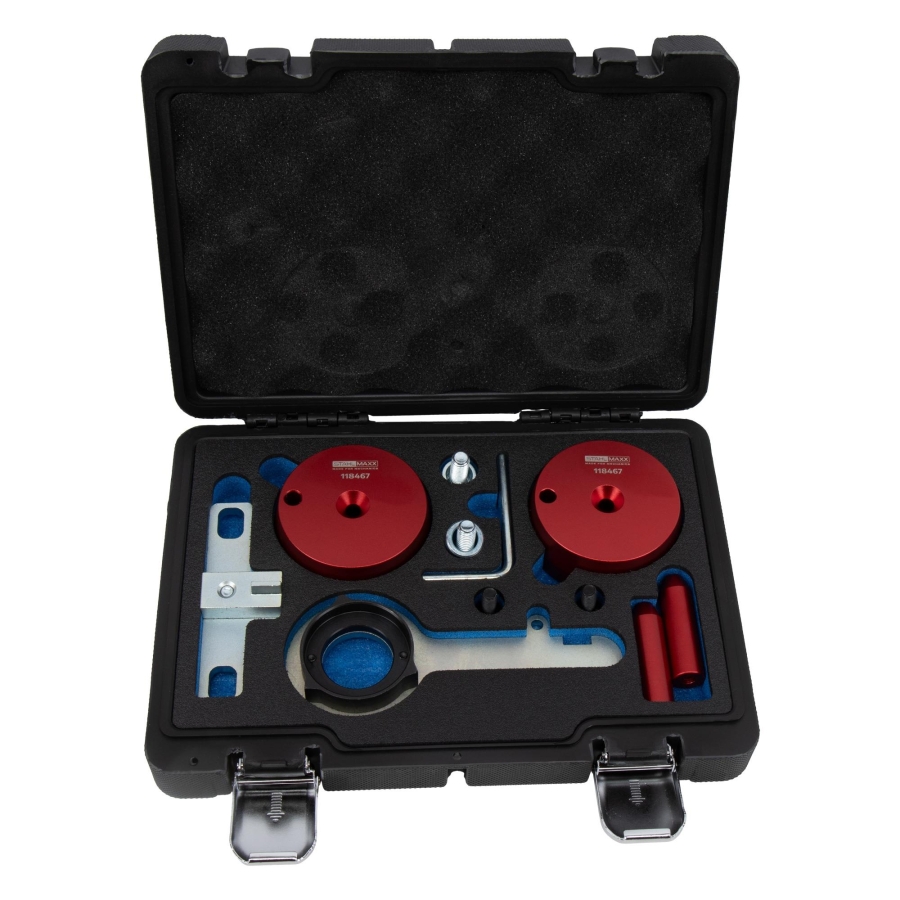
Ford 2.0 EcoBlue timing tool kit
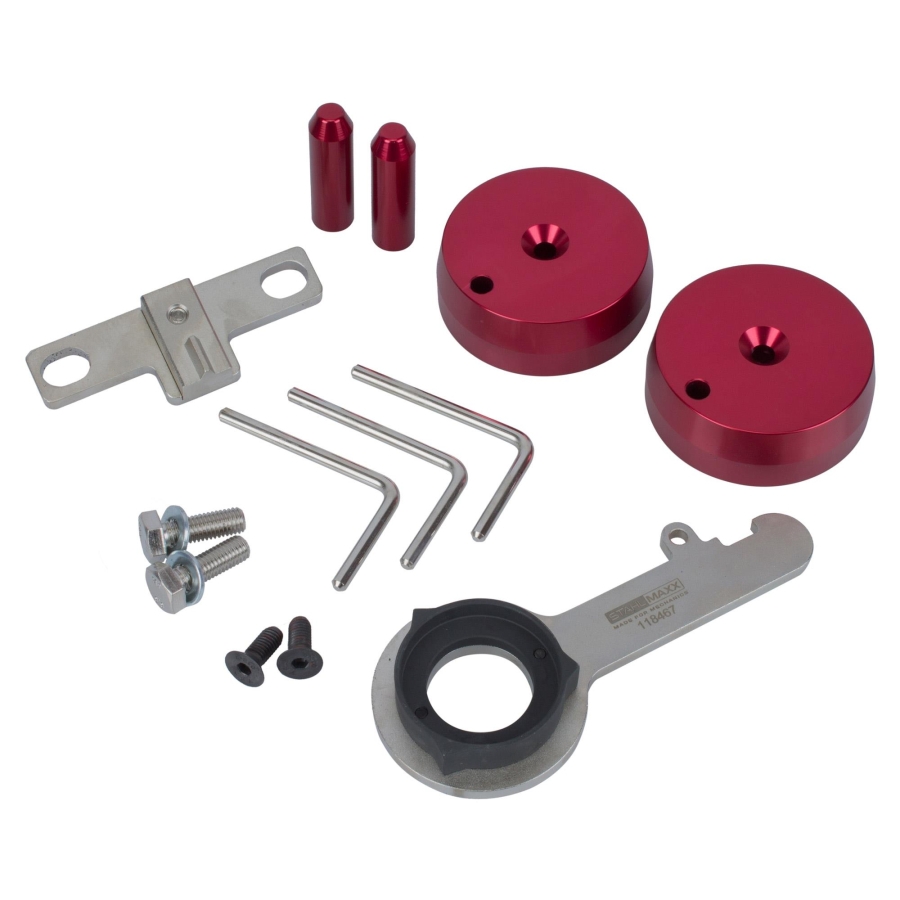
The timing-tool kit provides the locking and positioning tools required when replacing the oil-immersed timing belt on Ford 2.0 EcoBlue TDCi engines.
View the Ford 2.0 EcoBlue timing kitFor operations involving high tightening torque, a suitable 3/4" drive torque wrench and counter-holding equipment are recommended. The crankshaft bolt procedure can include values as high as 300 Nm followed by angle tightening.
Three crankshaft pulley puller versions
The crankshaft pulley design was revised several times during the production period of the Ford 2.0 EcoBlue engine. As a result, there are three different puller versions.
| Engine production version | Tool reference | Application | Product |
|---|---|---|---|
| Before 2019 | Ford 204-158-01 | Earlier crankshaft pulley design used on the first production versions of the 2.0 EcoBlue engine. | View puller |
| From 2019 onward | Ford 303-1657 | Revised puller for the later crankshaft pulley configuration introduced during production. | View puller |
| From 2023 onward | Ford 303-D121 | Latest puller version for the most recent crankshaft pulley design. | View puller |
Do not select the puller by registration year alone
Production changes do not always correspond exactly with the vehicle registration year. Check the vehicle model, production date, engine code, VIN information and the actual pulley design before beginning the repair.
An earlier puller may not fit a later pulley correctly. Using the wrong version can damage the pulley, the puller or surrounding components and can make removal unnecessarily difficult.
Timing-tool kit and component overview
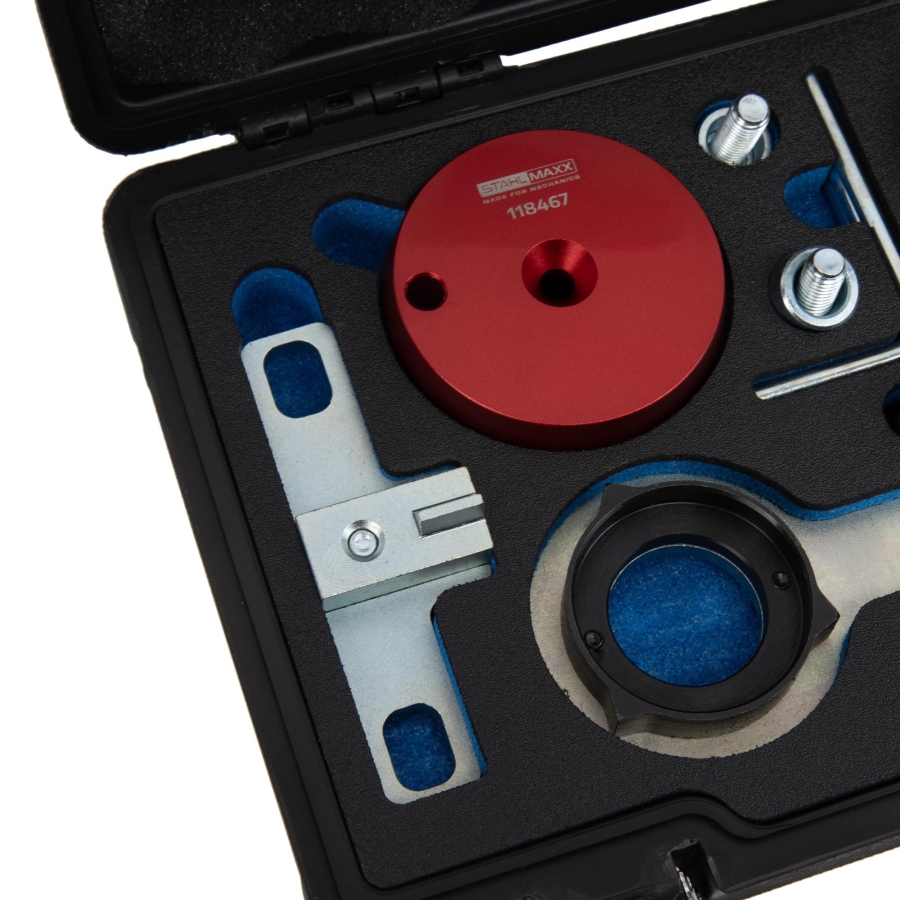
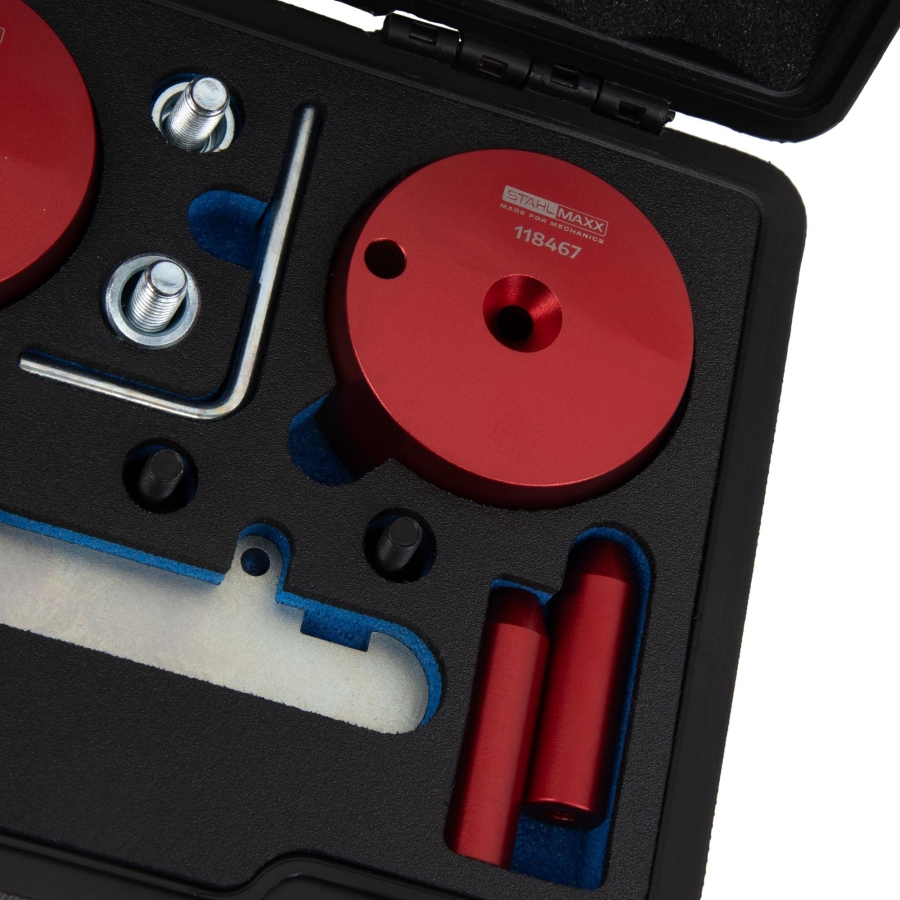
The following images show the timing-tool kit and its individual components. The tools are intended for accurate locking and positioning of the Ford 2.0 EcoBlue engine during timing-belt replacement.
Workshop procedure in overview
The exact procedure varies according to the vehicle and engine code, but the repair generally follows the sequence below.
- Lock the flywheel Remove the starter motor and install the flywheel locking tool in its place. This prevents the crankshaft from rotating during pulley removal and tightening.
- Remove the crankshaft pulley Use the correct pulley puller for the production version of the engine. Do not attempt to adapt an earlier puller to a later pulley design.
- Remove the front cover Use a suitable separation tool to release the bonded cover without damaging the mating surfaces. Remove old sealant carefully and prepare the surfaces for resealing.
- Position the engine at top dead centre Rotate the engine to the specified timing position and check the crankshaft and intermediate-shaft reference marks.
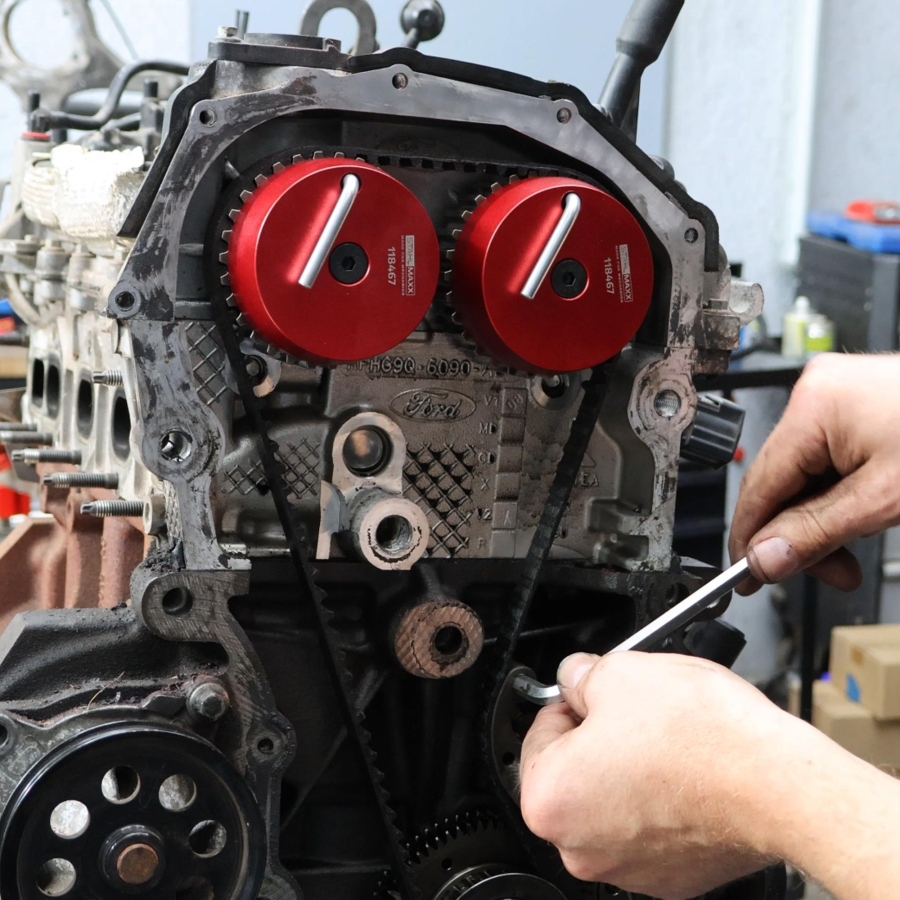
- Lock the crankshaft and camshafts Install the specified locking pins and positioning tools. The tools must enter without being forced.
- Replace the timing belt Remove the old belt and inspect it for missing teeth, swelling, cracks or material separation. Tapered installation sleeves such as Ford 303-1650 help guide the new belt into position without damaging its edges.
- Apply the specified belt tension Set the tensioner in accordance with the manufacturer procedure and tighten it to the specified torque.
- Rotate the engine and recheck the timing Rotate the engine manually through the required number of complete revolutions. Depending on the reference points, up to six rotations may be required before the marks align again.
- Confirm the timing before final assembly Reinstall the locking tools to confirm that the crankshaft and camshafts remain in the correct position.
Tool application
Correct installation of the locking tools is essential. The tools should locate accurately without being hammered, bent or used to counter excessive tightening force unless they are specifically designed for that purpose.
Torque values to check
Always follow the current, vehicle-specific manufacturer procedure. The following values are provided as workshop guidance based on the supplied application information and must be verified for the exact vehicle and engine code.
| Starter motor | 35 Nm |
| Auxiliary-belt tensioner | 48 Nm |
| Timing-belt tensioner | 25 Nm |
Crankshaft bolt example
Ford Tourneo 2020, 2.0 EcoBlue, engine code YMFA:
- Tighten to 10 Nm
- Loosen by 60°
- Tighten to 20 Nm
- Tighten to 70 Nm
- Tighten to 150 Nm
- Loosen by 90°
- Tighten to 100 Nm
- Tighten to 300 Nm
- Tighten by an additional 90°
This is a multi-stage tightening procedure involving high torque and angle tightening. Use suitable calibrated equipment and verify whether the crankshaft bolt must be replaced.
Practical workshop checks
- Check the oil condition and confirm that the correct oil specification has been used.
- Investigate the cause if fuel dilution is suspected.
- Inspect the removed belt for cracks, swelling, missing teeth and delamination.
- Clean the oil pickup and inspect the lubrication system if belt material is found in the engine.
- Replace associated tensioners, rollers and one-time-use fasteners where specified.
- Do not use the timing locking pins as counter-holding tools for high-torque fasteners.
- Check the engine timing at least twice before sealing and reinstalling the front cover.
- Use the correct crankshaft pulley puller for the exact engine production version.
- Apply the specified sealant correctly and observe its curing requirements.
- After the repair, use the prescribed engine oil and service interval.
Common vehicle applications
The Ford 2.0 EcoBlue engine is used in a wide range of passenger cars, commercial vehicles and pickup models.
Ford Edge · Focus · Galaxy · Mondeo · Ranger · S-MAX · Transit · Tourneo Custom
Vehicle coverage can vary according to the market, production date, engine code and exact engine configuration. Confirm compatibility before ordering special tools.
Summary
Timing-belt replacement on the Ford 2.0 EcoBlue is a precision repair. The wet-belt design requires careful inspection of the engine oil and belt condition, while the revised crankshaft pulley designs make correct tool selection particularly important.
Using the correct locking tools, installation sleeves and crankshaft pulley puller helps prevent component damage, reduces unnecessary workshop delays and allows the engine timing to be checked accurately before final assembly.
Select the correct tools for the engine version
Check the model, production date, engine code and pulley design before beginning the repair. The timing-tool kit and all three crankshaft puller versions are available separately.
View the timing tool kit
Post comment