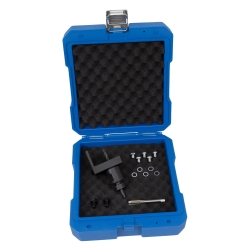
Short Circuit & Cable Detector for 12V / 24V Systems
-
Code:6644
-
Weight:0.262 Kgs
Overview:
✔ Professional diagnostic tool for tracing cables and detecting faults
✔ Detects and traces wires without damaging insulation
✔ Suitable for identifying short circuits and open circuits
✔ Compatible with 12V and 24V DC vehicle electrical systems
✔ Adjustable receiver sensitivity for accurate diagnostics
✔ Transmitter injects signal directly into the tested circuit
✔ Receiver probe detects and outputs an audible signal
✔ Suitable for workshop diagnostics and electrical troubleshooting

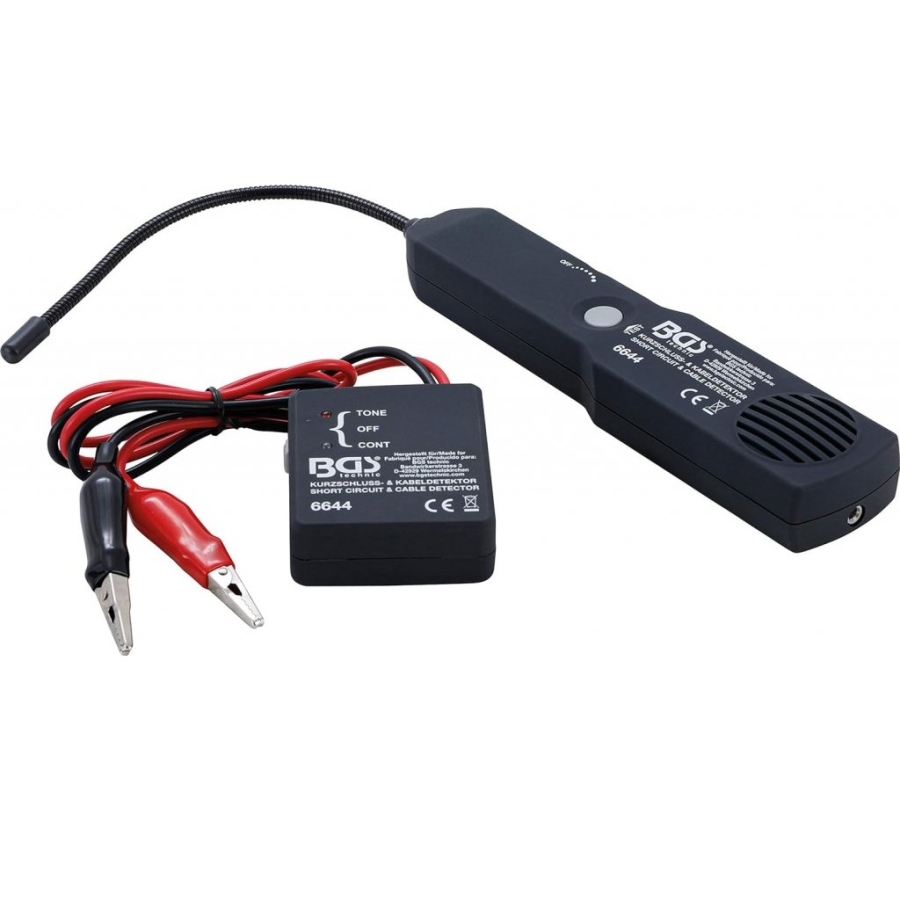
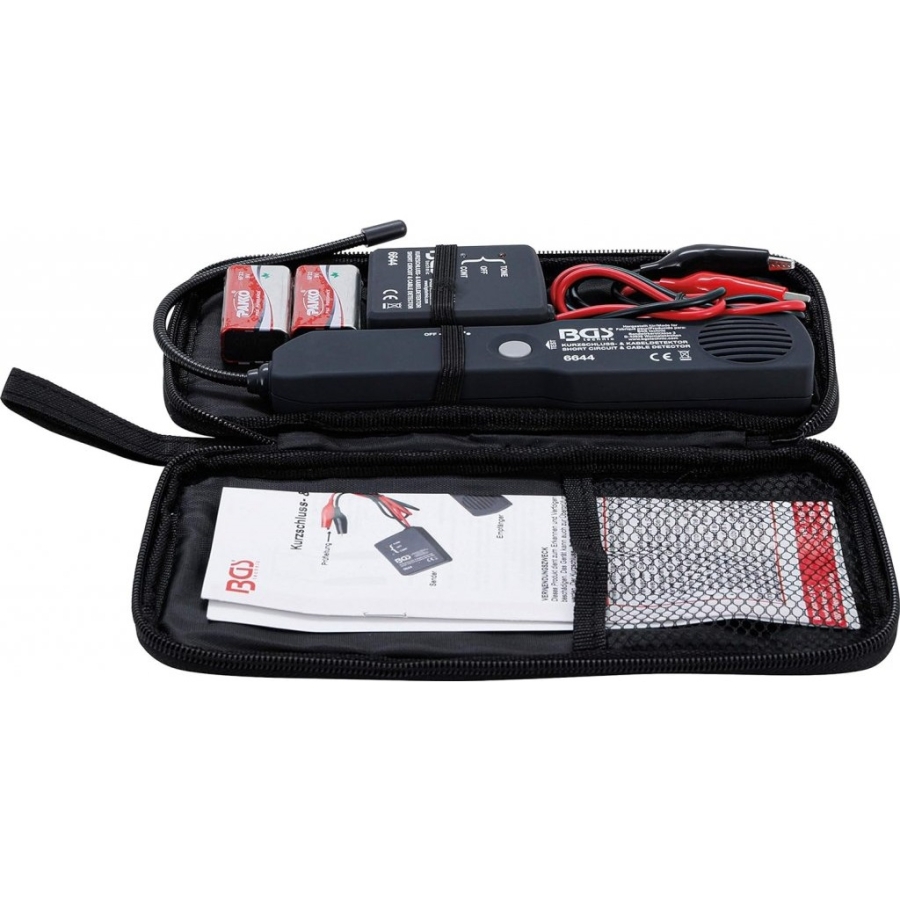
The Short Circuit & Cable Detector is designed for fast and efficient diagnostics of vehicle electrical systems. The device enables tracing and identifying cables without damaging wire insulation and can also be used to locate short circuits and open circuits.
The system works by transmitting a signal through the transmitter unit into the selected electrical circuit. The receiver with flexible probe detects the transmitted signal along the cable route and outputs an audible signal for precise wire tracing.
The adjustable receiver sensitivity allows accurate detection in various vehicle electrical systems and wiring harnesses.
Suitable for diagnostics, troubleshooting and maintenance work on 12V and 24V vehicle electrical systems.
Features
✔ Non-destructive cable tracing without insulation damage
✔ Detects wiring routes quickly and accurately
✔ Suitable for locating short circuits
✔ Detects interrupted or broken wires
✔ Adjustable receiver sensitivity
✔ Audible signal output for easier fault detection
✔ Suitable for 12V and 24V DC electrical systems
✔ Flexible receiver probe for easier access in tight areas
✔ Suitable for automotive electrical diagnostics
Technical Specifications
- Operating voltage: 12V / 24V DC
- Application: Cable tracing and fault diagnostics
- Fault detection: Short circuits and open circuits
- Signal indication: Audible signal output
- Receiver sensitivity: Adjustable
- Probe type: Flexible receiver probe
Package Contents
- Transmitter unit with test leads
- Receiver unit with flexible probe
Applications
Suitable for:
✔ Vehicle electrical diagnostics
✔ Cable tracing and wire identification
✔ Detection of short circuits
✔ Detection of cable interruptions
✔ Automotive workshops
✔ Professional and DIY use
Usage Instructions – Wire Tracing Probe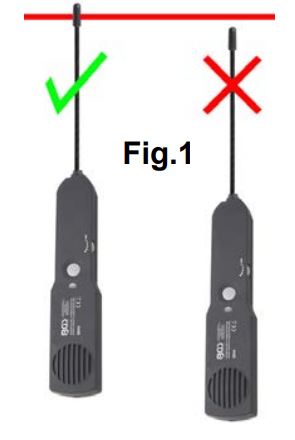
The wire tracing probe is designed with a flexible coiled steel shaft that can be bent as needed, allowing access to wires located in tight, congested, or hard-to-reach areas. For optimal signal detection, position the probe tip (black cap) perpendicular (90°) to the wire being traced and either directly above or below it. Although the receiver can detect signals from multiple positions depending on circuit characteristics and sensitivity settings, correct probe positioning ensures the strongest and most accurate signal.
Sensitivity Adjustment
- Turn the Receiver rotary switch clockwise to power on the unit and increase sensitivity.
- Turn the rotary switch counterclockwise to decrease sensitivity or switch the Receiver off.
- Begin with the sensitivity set at the middle position and adjust if necessary.
Wire Tracing Procedure
- Set the Sender switch to "TONE". The red LED should illuminate. If it does not light, check the battery condition.
- Turn on the Receiver and set the sensitivity to the middle position.
- Press and hold the TEST button and move the probe close to the Sender test lead. An audible signal confirms correct operation.
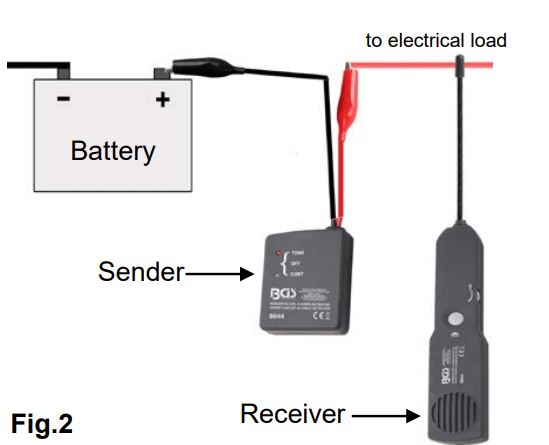
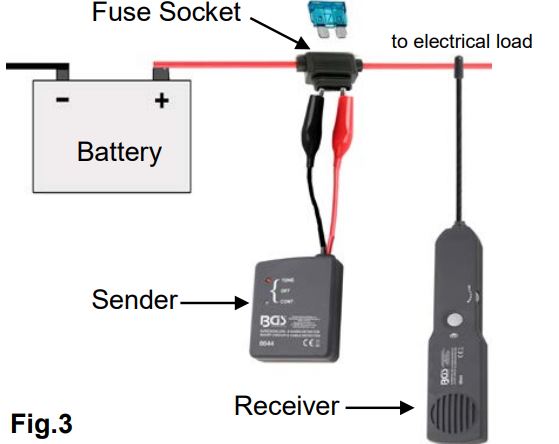
- Connect the black test lead to the circuit positive supply (or negative supply on vehicles with positive chassis grounding).
- Connect the red test lead to the wire or circuit that needs to be traced. Fuse sockets, connectors, or similar access points can be used.
- Press and hold the TEST button and slowly move the probe close to the wire.
- Position the probe tip at a 90° angle to the wire and trace along its path.
- Follow the audible signal from the Receiver. Signal strength will increase when the probe is closer to the wire and decrease as distance increases.
- If signal detection is weak or unavailable, increase Receiver sensitivity and repeat the tracing process. For suspected wire locations, verify the result by checking multiple times.
- After completing the test, disconnect all test leads, switch the Sender to OFF, and release the TEST button.
Note: Always follow the specified operating limits and safety precautions while using the device.